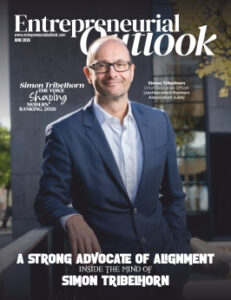
A Strong Advocate Of Alignment Inside The Mind Of Simon Tribelhorn
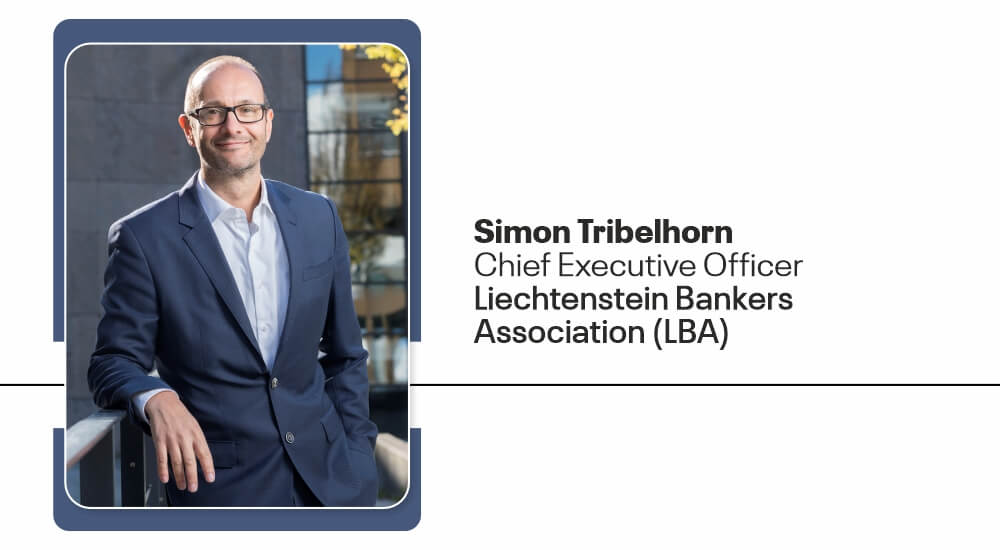
The legal mind is often trained to view the world through the lens of strict structures and predictable consequences, prizing precision above all else. Yet, for Simon Tribelhorn, the law was never meant to be practiced in a vacuum. Spending his entire career as a corporate counsel within the fast-paced banking sector, Simon learned early on that mastering the law is only half the battle; the real art lies in marrying legal precision with sharp business acumen. From the very beginning, his approach has been defined by a crucial, pragmatic realization: being legally right doesn’t automatically guarantee success, and moving an organization forward requires anticipating the next move long before the verdict is reached.
As the Chief Executive Officer of the Liechtenstein Bankers Association (LBA), Simon has spent years operating at the volatile intersection of global finance, state politics, international regulation, and shifting societal expectations. In an era defined by macroeconomic shocks, rapid technological disruption, and a foundational re-evaluation of what capital should accomplish, his role has evolved far beyond the traditional boundaries of an industry representative. He does not view his mandate as an exercise in winning isolated arguments or securing narrow, short-term victories for a single sector. Instead, Simon operates as a strategist and diplomat – an executive whose leadership style is anchored in a deep-seated commitment to institutional alignment, intellectual agility, and a profound sense of personal responsibility.
To understand the modern landscape of sustainable finance and European banking resilience is to understand the philosophy of the person steering its most agile laboratory. Simon’s approach to executive leadership challenges the conventional tropes of the detached, numbers-driven banking executive. His methodology blends the analytical rigor of a corporate strategist with the nuanced empathy of a diplomat, the physical discipline of endurance, and the forward-looking curiosity of a technologist. Through his leadership, Simon is helping to advance a more ambitious vision of banking — one that moves beyond defending past reputations and instead seeks to position the industry as a proactive, purpose-driven force for mobilizing capital toward tangible, real-world outcomes.
The Legal Anchor and the Art of Translation
Every executive brings a foundational toolkit to the boardroom, a cognitive framework forged early in their career that dictates how they process information, manage risk, and communicate under pressure. For Simon, that toolkit was assembled in the rigorous world of jurisprudence.
“My legal background trained me to be precise, structured and aware of consequences,” Simon reflects when analyzing the roots of his leadership style. “In banking leadership, that is invaluable”. The capacity to dissect a complex piece of cross-border legislation, to anticipate the secondary and tertiary systemic effects of a regulatory shift, and to maintain an unassailable standard of institutional compliance is a direct dividend of his legal training.
However, the true maturity of Simon’s leadership lies in his recognition of the limits of black-letter law. While a legal education teaches an individual how to build an airtight case based on static precedents, executive leadership in a globalized economy demands an entirely different cognitive faculty: judgment.
In a volatile corporate ecosystem, data points and legal frameworks provide the parameters of a situation, but they do not make the ultimate decision. Simon understands that the core responsibility of a modern chief executive is to act as a translator. The modern marketplace is flooded with an overwhelming surplus of information – a chaotic mix of geopolitical instability, shifting market indicators, hyper-regulation, and technological noise. The executive cannot simply dump this complexity onto their board, their members, or the public. They must possess the rare capacity to distill dense, multi-faceted ambiguity into clear, actionable choices.
This philosophy of translation directly shapes Simon’s approach to executive communication. In an industry often criticized for hiding behind dense, opaque jargon or overly managed public relations statements, his communication style is deliberately distinct. He strives to be direct without falling into the trap of oversimplification. True communication clarity does not mean stripping a topic of its necessary nuance; rather, it means organizing that nuance so effectively that the core truth becomes unmistakable to every stakeholder involved.
This commitment to directness and precision serves as the bedrock of his diplomatic methodology. Within the financial services sector, a CEO is constantly navigating a minefield of conflicting agendas. Regulators demand absolute compliance and risk mitigation; member banks seek operational agility and profitability; politicians track public sentiment and electoral cycles; and society at large demands ethical accountability and sustainable corporate citizenship. A traditional leader might approach these competing dynamics as a zero-sum game, negotiating from a position of leverage to force a compromise.
Simon, however, rejects the concept of leadership as a battle of attrition. “As CEO of a banking association, my role is not to ‘win an argument,'” he notes, “but to create alignment between banks, regulators, politics and society without bargaining on the core values”.
To achieve this alignment, he employs a highly intentional approach: listening first. True diplomacy requires an executive to temporarily set aside their own immediate objectives to fully understand the underlying interests, anxieties, and motivations that drive their counterparty’s stated position. By mapping these hidden incentives across different sectors, Simon identifies the underlying common ground where shared progress can occur. This bridge-building process cannot be rushed or executed through transactional deals. It requires a sustained investment in institutional clarity, the painstaking cultivation of personal trust, and an unwavering commitment to a long-term strategic vision.
The Rhythm of the Day: Information, Distance, and Resilience
The relentless operational pace of a modern chief executive can easily consume their mental clarity, leaving them trapped in a cycle of reactive decision-making. To counteract the standard pressures of executive life, Simon has tried to engineer a disciplined daily routine designed to build cognitive resilience and maintain strategic perspective. His routine is structured around two distinct operational phases: an early morning dedicated to intellectual absorption and an evening focused on physical decompression.
For Simon, the business day begins long before the first formal meeting. His early mornings are defined by a quiet, self-directed ritual: pouring a substantial amount of coffee and systematically reading the global news. This intake of information is not merely a passive habit; it is a critical strategic exercise.
“For me, being well informed at the beginning of the day is essential,” Simon explains. Before the tactical, day-to-day demands of executive life take over, he utilizes this uninterrupted morning window to map out the broader landscape. He synthesizes developments across seemingly disparate fields- connecting a geopolitical shift in Asia to a market reaction in New York, a new regulatory proposal in Brussels, an emerging technological breakthrough in Silicon Valley, or an evolving societal trend. By mapping these macro forces early in the morning, he ensures that when he starts his business day, his decisions are guided by a comprehensive, open-minded perspective and mindset rather than short-term reactions.
If the morning is dedicated to intellectual intake, the end of the day belongs to physical discipline.
“Sport… is more often my way to end the day,” he shares. “It gives me the space to reflect, process decisions and wind down”.
The corporate world frequently views intense physical exercise as a tool for physical fitness or stress relief. For Simon, however, sports serve a vital cognitive function: creating intellectual distance. After a full day spent navigating complex issues, analyzing data, and making high-stakes decisions, the mind can become hyper-focused on immediate problems. Engaging in an intensive physical discipline forces a mental shift. It breaks the cycle of executive overthinking, creating the distance necessary to see long-term solutions that are often obscured by immediate operational noise.
This evening physical routine functions as an intentional cognitive reset. It allows Simon to process the day’s events, step back from immediate frustrations, and protect his psychological well-being. Ultimately, he views sports not through the narrow lens of personal recreation, but as a core pillar of corporate performance. It is an active practice that builds personal resilience, maintains health, fosters deeper reflection, and reinforces the everyday discipline required to lead an international financial organization.
The Credibility of Boundaries
The concept of work-life balance is frequently discussed in executive profiles, often reduced to a superficial talking point or a collection of well-meaning platitudes. Simon approaches the topic with a refreshing lack of pretense, acknowledging the inherent difficulties of balancing a demanding executive role while keeping a firm, non-negotiable personal commitment: family comes first.
“For me, it is quality before quantity,” Simon states candidly. He openly acknowledges the reality facing any top-tier executive: in a position defined by international integration and constant challenges, it is simply not always possible to be physically present as much as one might wish. Because time is a finite resource, the emphasis must shift from the total number of hours logged at home to the emotional and intellectual depth of those hours.
To make this balance work, Simon applies the same strategic intent to his home life that he brings to a high-level corporate negotiation. When he crosses his threshold at the end of the day, his objective is to be fully present – not merely occupying a physical space, but engaging deeply on a mental and emotional level with his family.
Maintaining this boundary requires a continuous, deliberate effort. “This is a daily practice, and I do not always get it perfectly right,” Simon notes with characteristic humility. “But the principle is clear: family comes first”.
Practically, this means establishing and defending clear boundaries around family time, particularly during weekends and key personal milestones. He protects these personal windows with the same discipline and institutional respect that he applies to a critical meeting with a regulator or a major stakeholder.
For Simon, this boundary is a matter of core leadership integrity. He firmly rejects the paradigm of the executive who achieves immense professional success by completely exhausting their personal life, leaving only leftover, low-energy attention for their partner and children.
“Success is not meaningful if the people closest to you only get what is left of your energy,” he observes. In his view, leadership cannot be compartmentalized. If a leader’s values, discipline, and vision are not credible and respected within their own home, they cannot be genuinely credible within the wider corporate world.
Re-Engineering the Boutique Laboratory
When looking at the global financial landscape, it is easy to focus exclusively on major capital hubs like London, New York, or Frankfurt. Yet, Simon has long recognized that size can often breed institutional inertia, rendering massive financial centers slow to adapt to changing market dynamics. In contrast, smaller, highly specialized financial hubs can serve as agile testing grounds for the entire global industry. This perspective informs his strategic management of Liechtenstein’s unique economic position.
The jurisdiction occupies an unusual position in the global economic architecture, maintaining dual market access through its membership in the European Economic Area (EEA) while remaining deeply integrated with the Swiss economy and utilizing the Swiss franc as a stable currency anchor. While outside observers might view this dual positioning as a defensive buffer against external volatility, Simon frames it entirely differently.
“I would not call this a shield in the sense of isolation,” he clarifies. “It is more a platform for resilience and optionality”.
In a volatile global landscape, international investors are not looking for isolation or protection from change. Instead, they seek legal certainty, political stability, high-quality regulatory frameworks, and seamless access to multiple major economic zones. The Liechtenstein financial centre focuses on combining these structural advantages in a highly pragmatic manner, leveraging premium local financial intermediaries to deliver exceptional asset preservation and sophisticated cross-border investment solutions.
This structural resilience is reflected in the country’s consistent AAA credit rating from Standard & Poor’s – an accolade that Simon notes is the result of long-term planning rather than short-term metrics. It is built on public finances, political stability, institutional discipline, conservative risk management, and a dedicated focus on long-term wealth management.
“Liechtenstein does not try to be everything to everyone,” Simon observes. “Its strength lies in specialization, quality and trust”. This focus allows local banks to remain agile during crises, drawing on deep client relationships and an international network to weather macroeconomic shocks. “Resilience is not built during a crisis; it is built before it,” he emphasizes.
A clear example of this long-term strategy is the country’s historic democratic vote to join the International Monetary Fund (IMF). For a highly integrated international financial hub, international perception and credibility are vital operational assets. Simon views the IMF referendum as a milestone that provides strong democratic legitimacy for the financial center’s commitment to international cooperation, financial transparency, and macroeconomic dialogue.
“It is not about changing who we are,” Simon points out. “It is about making our stability even more visible and understandable internationally”. By integrating into the global economic framework, the jurisdiction adds an explicit layer of credibility that supports its long-term development.
Moving Past the Checkbox: The New Sustainable Paradigm
Perhaps the clearest example of Simon’s forward-looking leadership is his approach to sustainable finance. For much of the corporate world, the concept of ESG (Environmental, Social, and Governance) compliance has become a bureaucratic exercise – a complex matter of checking disclosure boxes, compiling reports, and securing marketing labels to avoid negative attention. Simon, however, rejects this passive approach to sustainability, recognizing that superficial compliance offers diminishing returns for both investors and society.
Under his direction, the LBA has moved beyond the initial milestones of its Roadmap 2025 strategy, which established sustainability and innovation as core priorities across the financial center. It is Simon’s ambition to help move the industry toward a far more ambitious objective: progressing from passive compliance to tangible, outcome-linked performance.
“ESG compliance is necessary, but it is not enough,” Simon argues. “We need to move from reporting to real-world outcomes, from labels to measurable contribution, and from risk management to opportunity creation”.
He does not view the United Nations Sustainable Development Goals (SDGs) as a promotional narrative or a public relations exercise. Instead, he treats them as a functional, strategic framework for capital allocation. The fundamental challenge facing modern finance is not a lack of global capital, but an allocation gap – a systemic failure to direct existing liquidity toward the projects and regions where it can generate the greatest real-world impact. The core question for leadership is how to effectively mobilize private capital to close this funding gap.
To solve this allocation problem, Simon advocates for using innovative mechanisms like blended finance and asset tokenization, positioning that are uniquely suited to a boutique financial ecosystem. Blended finance structures allow public or philanthropic capital to absorb early-stage risk, improving the risk-return profile for commercial investors and unlocking private funding for vital infrastructure and development projects. Concurrently, asset tokenization leverages distributed ledger technology to break down complex assets into accessible, highly transparent fractional units, streamlining cross-border transactions and lowering costs.
Simon explicitly frames smaller financial centers as innovation laboratories for these mechanisms. Being small allows for operational agility and rapid regulatory deployment, while a strong reputation for institutional stability ensures global trust.
The LBA has put this theory into practice by supporting pioneering initiatives like tokenized sustainable bonds and the Global South Impact Fund. These projects serve a clear strategic purpose: to make real-world impact investable, scalable, and credible for global markets. “The opportunity is to build structures that connect client demand, capital markets and real-world needs much more effectively,” Simon notes, positioning his organization at the forefront of these emerging models.
This willingness to innovate is also reflected in the LBA’s support for non-traditional, cross-sector alliances. Under Simon’s leadership, the association has backed unique ecological initiatives, such as partnering with the organization rrreefs to focus on marine habitat and ocean reef preservation. To traditionalists, an alliance between a banking association and a marine science project might seem unusual. To Simon, it is a natural extension of a modern financial center’s core responsibility.
“Finance is ideally placed at the interface between investors and the places where capital is most needed and can have the greatest impact,” he explains. Simon believes that biodiversity, environmental health, and global finance cannot continue to operate in isolated silos.
This view aligns with a major shift in investor demographics. The next generation of wealth creators and asset inheritors is fundamentally redefining the relationship between capital and value. They increasingly demand investment strategies that preserve wealth while actively contributing to global environmental and social solutions. By building bridges between scientific research, tech entrepreneurship, philanthropy, and mainstream investment, a forward-looking banking association can deliver lasting value for both clients and wider society.
The Technology Paradox: Authenticity over Automation
As artificial intelligence, advanced machine learning, and digital analytics reshape the financial services sector, many executives have embraced a philosophy of complete automation. In public forums and corporate strategies, technology is often presented as a cure-all – a rapid shortcut to hyper-efficiency, cost reduction, and automated client interactions. Simon, however, approaches the digital revolution with a nuanced perspective, balancing tech adoption with a firm insistence on human governance and intellectual accountability.
He recognizes that data is the foundational currency of modern sustainable finance. “Reliable, high-quality data has become essential,” he points out. “Without data, sustainability remains a promise”.
In an era where corporate greenwashing poses a significant threat to industry credibility, advanced digital analytics, AI, and tracking tools provide an essential line of defense. These technologies allow financial institutions to audit portfolios, track real-time environmental impacts, flag inconsistencies, and provide clients with verifiable transparency.
Crucially, Simon insists that technology must be used as an “evidence layer,” not a “marketing layer”. While AI can efficiently process massive volumes of complex sustainability data, it cannot function in isolation. It must be paired with rigorous governance, clear methodologies, and human judgment.
Authenticity in sustainable finance cannot be generated by an algorithm; it comes from absolute traceability. High-net-worth clients must be able to clearly see how an investment is measured, understand the underlying methodology, and openly review any data limitations.
This commitment to balancing technological innovation with legal certainty is central to how Simon navigates complex regulatory shifts, such as the European Union’s Markets in Crypto-Assets (MiCA) regulation and the Digital Operational Resilience Act (DORA). For many financial hubs, implementing these strict, comprehensive frameworks is viewed as a major operational hurdle that can stifle innovation and delay product launches. Simon’s strategy focuses on early engagement and a structured, highly pragmatic implementation process.
“Regulation should protect clients and the system, but it should also enable responsible innovation,” he asserts. Navigating these mandates requires continuous monitoring, proactive issue management, and an ongoing dialogue connecting banks, fintech startups, regulatory supervisors, and policymakers. The objective is to combine strict compliance with operational agility, maintaining an optimal framework for sustainable economic growth.
This balance is particularly evident in the LBA’s public stance on artificial intelligence and education. The association has made the definitive statement that AI is no substitute for core financial literacy. While AI tools can improve advisory services, optimize operations, and expand access to information, they cannot replace human understanding.
In fact, Simon argues that AI literacy must now be integrated into modern financial education. As these tools become widespread, consumers and professionals must understand both their potential and their systemic limitations – including inherent algorithmic bias, data privacy concerns, the risks of overreliance, and false confidence in automated outputs.
“Financial literacy is not old-fashioned because AI exists,” Simon maintains. “It becomes even more important, because technology increases both the possibilities and the risks”. In an automated marketplace, trust and human comprehension remain the core assets of the financial system.
Cultivating the Polymath Leader
A financial centre’s long-term success is ultimately determined by its talent pool. For a small, highly connected and internationally dependent financial centre such as Liechtenstein, attracting and retaining talent is not merely a strategic option, but a structural necessity. In a global industry where major financial hubs compete through scale, compensation power and market concentration, Liechtenstein must differentiate itself through quality, responsibility and personal impact. In this context, the LBA’s role is to act as a facilitator — helping to connect stakeholders, strengthen awareness and support the conditions that allow talent to thrive.
“Liechtenstein cannot compete on size,” he notes candidly. “We compete on quality, responsibility and proximity to decision-making. For talent, that is attractive”.
In a vast, bureaucratic financial institution, young professionals often find themselves confined to isolated roles, executing specialized tasks with little visibility into the broader strategic choices driving the firm. A boutique ecosystem offers the exact opposite experience.
Simon emphasizes that in a close-knit financial community, young talent works directly alongside entrepreneurs, business owners, senior executives, and policymakers. They gain immediate exposure to high-level decision-making and can see the direct, real-world impact of their work far more clearly than in an anonymous global system.
To leverage this advantage, the banking centre’s talent strategy combines high-quality professional education with strong academic links to the University of Liechtenstein, while tapping into deep regional talent pools across Switzerland and Austria. It prioritizes flexible working models and provides a clear, defining sense of purpose.
“Young talent wants challenge, responsibility and meaning,” Simon states. “We must offer all three”.
This focus on developing well-rounded, versatile talent reflects Simon’s broader perspective on modern executive leadership. He points to David Epstein’s book, Range, as a major influence on his approach to human capital and organizational strategy. The book’s core thesis – that in highly complex, unpredictable environments, lasting progress is driven by generalists who can connect insights across multiple fields, rather than specialists confined to a single discipline – resonates strongly with his vision for the financial sector.
“The most interesting solutions emerge where banking meets technology, sustainability, science, education and entrepreneurship,” Simon believes. He applies this philosophy to his own career, continually exploring emerging fields like advanced AI applications, asset tokenization, digital spaces, and evolving models of communication.
In his view, contemporary leadership is no longer about maintaining static expertise within a single industry silo. It requires a commitment to continuous learning, the flexibility to rapidly shift strategic perspectives, and the diplomatic skill to build collaborative bridges between diverse professionals who may not naturally speak the same language.
The Proportionality Battle and a Legacy of Contribution
This commitment to industry diversity and specialization drives Simon’s ongoing advocacy for “proportional regulation” across Europe. He is a vocal critic of the standardized, “one-size-fits-all” regulatory frameworks that often originate from central international authorities. He argues that designing regulations based solely on the operational scale of the world’s largest investment banks creates unintended systemic risks for the broader financial ecosystem.
“One-size-fits-all regulation can unintentionally reduce diversity, competition and innovation,” Simon warns. When a small, highly specialized financial hub is subjected to regulatory requirements tailored for multi-national institutions, compliance costs can quickly become disproportionate without delivering any actual improvement in client protection or systemic stability.
Simon explicitly clarifies that his push for proportionality is not an argument for lowering industry standards or creating regulatory loopholes. Instead, it is a call for smarter, risk-based applications.
Proportionality means maintaining the same rigorous regulatory objectives while allowing the specific rules and implementation mechanics to match the actual risk profile and scale of the institution. Europe benefits from maintaining nimble, entrepreneurial financial hubs that can adapt rapidly to changing market conditions, serve specific client needs, and contribute to the economic competitiveness of the continent as a whole.
This ongoing regulatory and strategic work is ultimately tied to a deeply personal motivation. Beyond corporate milestones, board alignments, and economic growth rates, Simon’s long-term vision is guided by his family and the future he will leave for his children. He views his executive role through the lens of generational accountability, wanting to demonstrate to his children that an active career in global finance can be a powerful vehicle for positive world change.
When asked about the definitive legacy he hopes to leave as a leading voice in modern banking, Simon focuses on a major paradigm shift for the industry.
“I would like my legacy to be that I helped move banking from a defensive discussion about reputation to a proactive discussion about contribution,” he states.
For too long, the international banking sector has operated in a defensive posture, focused on crisis management and protecting its legacy reputation against public skepticism and shifting political pressures. Simon’s career is an ongoing argument that the financial industry can be repositioned as an active force for good. In his vision, modern banking should stand as a symbol of trust, structural stability, and social responsibility, while serving as a dynamic platform for technological innovation and real-world problem solving.
Through the Roadmap 2025, the Liechtenstein banking centre has demonstrated that a specialized financial hub can maintain a global perspective and act with a clear, defining sense of purpose. For Simon, it was and now under the upcoming Roadmap 2030 still is a privilege to contribute to this development. It shows that true success is not measured solely by financial returns or asset volumes, but by the tangible, lasting value mobilized for the world.
“If my children one day see that I did not only talk about a better world, but tried to mobilise people, ideas and capital towards it,” Simon concludes, “that would mean a lot”.