Long before the accolades, the breakthrough discoveries, and the leadership of a premier research institution, there was simply an eight-year-old boy trying to make sense of the incomprehensible. The genesis of Dr. Nicolas G. Bazan’s lifelong odyssey into the labyrinth of the human brain did not occur in a sterile laboratory or a quiet library. It happened in the sudden, terrifying grip of a medical emergency. At that tender age, young Nicolas witnessed his beloved aunt succumb to the violent, unpredictable throes of an epileptic seizure.
For a child, seeing a loved one abruptly stripped of their autonomy, watching the body betray the mind in such a dramatic, physical manifestation, was a profound and deeply unsettling experience. When the crisis passed, his mother offered a simple but heavy explanation: her sister suffered from a “brain disease.” In the mind of the eight-year-old, those two words became a formidable, almost mystical concept. It was difficult to grasp how an unseen organ could completely override a person’s control, yet the evidence was irrefutable. The realization washed over him that the brain held absolute, power over human life, behavior, and well-being.
That single, frightening moment planted an unshakeable curiosity within him. It was not merely a passing childhood fright, but the ignition of a lifelong vocational calling. The desire to decode the terrifying mystery of his aunt’s condition guided his academic steps, pushing him relentlessly toward the study of medicine. He entered the field of neuroscience not just with intellectual ambition, but with a deeply personal hope: to understand the physical mechanisms of the mind well enough to alleviate the profound suffering caused by neurological conditions. That early encounter with vulnerability forged a moral imperative that would become the bedrock of his entire career.
The Philosophical Frontier: Molecules, Meaning, and the Soul
As Dr. Bazan progressed through his rigorous medical training, his childhood fascination evolved into a sophisticated, philosophical inquiry into the nature of human existence. He found himself utterly captivated by the brain’s seemingly magical ability to weave meaning, memory, and personal identity out of microscopic, biochemical processes. How does the firing of a neuron translate into the memory of a summer afternoon? How do ions and atoms construct the concept of “self”?
In his quest for answers, Bazan navigated the complex intersection of neurobiology and philosophy, examining the contrasting viewpoints of modern science’s greatest minds. He found resonance in the bold assertions of Francis Crick, who, in his seminal work The Astonishing Hypothesis, posited a strictly reductionist view of the human experience. Crick argued that all mental activities, every thought, emotion, and decision, are entirely dictated by the behavior of neurons, glial cells, and the fundamental atoms and molecules that comprise them. Under this paradigm, even the most profound human concepts, such as consciousness, free will, and the very idea of a soul, are stripped of their mysticism and laid bare as subjects for rigorous, empirical scientific investigation.
Yet, Bazan’s intellectual appetite also drew him toward the boundaries of this materialist view. He deeply considered the contrasting perspectives that suggest chemistry and biology alone might not be sufficient to explain the totality of human consciousness. He explored the theories of theoretical physicist David Bohm, who introduced the radical concept that consciousness is not something the brain constructs, but rather something the brain reveals. Bohm’s proposition of an inherently non-local phenomenon, a consciousness that is not strictly confined to the physical architecture of an individual brain, provided a tantalizing counterbalance to Crick’s molecular certainty.
For Dr. Bazan, the tension between these two colossal ideas, the brain as a molecular machine versus the brain as a receiver of broader consciousness, fueled his relentless drive. The devastating, real-world consequences of neurological disorders served as a constant anchor, ensuring that his pursuit of these lofty philosophical questions remained firmly grounded in the urgent, moral necessity of healing the afflicted.
Architect of Excellence: The LSU Health Mission
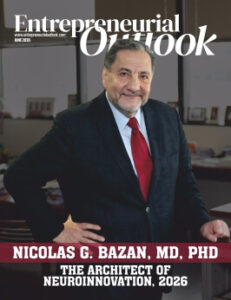
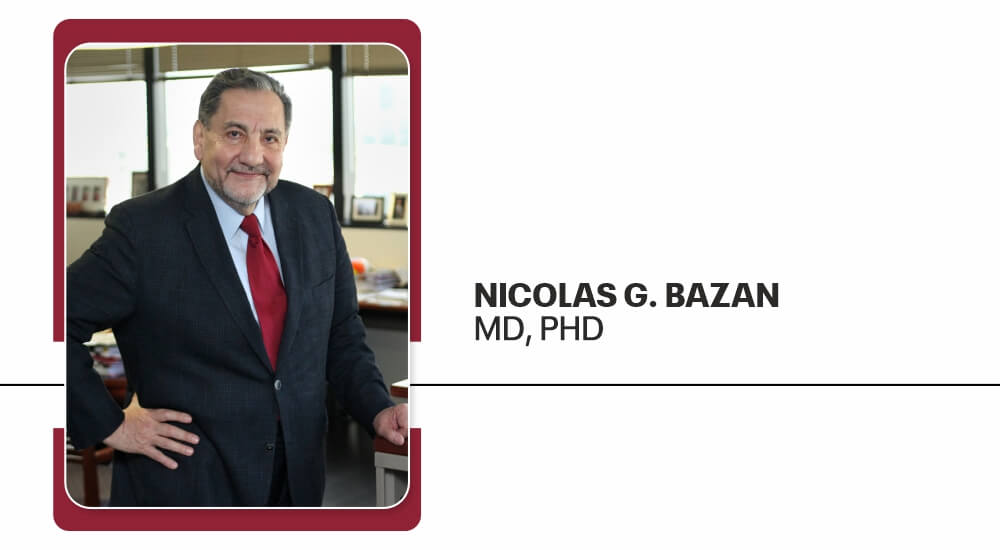
Today, Dr. Nicolas G. Bazan channels his decades of inquiry and insight into his role as the Professor and Director of the Neuroscience Center of Excellence at LSU Health New Orleans. Under his stewardship, the Center has become a crucible for innovation, operating with a crystalline, multifaceted academic mission. At its core, the institution is dedicated to the rigorous education of graduate students and medical doctors in training, ensuring that the next generation of healers and researchers are equipped with the tools to push the boundaries of medical science.
However, Bazan’s vision for the Center extends far beyond traditional pedagogy. He is actively rewiring how young scientists approach the discipline. He recognizes that the future of neuroscience cannot be siloed. Therefore, he insists on training his students and fellows to think integratively, demanding that they connect the dots across vastly different disciplines. In Bazan’s ecosystem, a researcher must be able to trace a concept all the way from the invisible interactions of molecules up to the complex manifestations of human behavior.
His strategic focus for the Center rests on four pillars: discovery, collaboration, translation, and innovation. The ultimate objective is to bridge the fundamental, mechanical operations of brain function with the urgent need to understand how the brain attempts to protect itself when besieged by pathology. Bazan’s team is on a continuous hunt for specific molecules and novel targets that possess neuroprotective properties. The endgame is clear and unwavering: to extract these fundamental discoveries from the laboratory bench and forge them into viable clinical applications that tangibly improve human brain health.
The Lipid Paradigm Shift: Rewriting the Rules of Neurobiology
To understand Dr. Bazan’s legacy is to understand a fundamental rewiring of modern neurobiology, specifically regarding the role of lipids in the brain. For a long time, the scientific consensus relegated lipids to a rather mundane status. They were viewed primarily as the passive building blocks of cellular membranes or merely as inert storage units for energy.
Early in his career, while the broader scientific community was heavily focused on exploring the omega-6 family of essential fatty acids, including prostaglandins and their derivatives, Bazan turned his attention to a different horizon. He spearheaded the discovery and rigorous characterization of bioactive lipid mediators, specifically focusing on docosanoids derived from essential omega-3 fatty acids.
What Bazan and his team uncovered was nothing short of revolutionary. They demonstrated that these lipids were not passive structural elements at all; rather, they were highly active, vital participants in the complex cellular signaling networks that dictate life and death within the brain. His research isolated specific docosanoids, most notably neuroprotectin D1 (NPD1), and the discovery of elovanoids, revealing their profound pro-homeostatic bioactivities. These molecules act as master regulators of inflammation, cell survival, and neuroprotection.
This milestone completely fractured the existing conceptual understanding of brain chemistry. Bazan proved that these bioactive lipid mediators actively protect vulnerable retinal cells and neurons from the devastating effects of oxidative stress and injury. Furthermore, his work highlighted a dark corollary: the dysregulation of these lipid pathways actively contributes to the onset and progression of catastrophic neurodegenerative conditions, including Age-Related Macular Degeneration (AMD), ischemic stroke, Traumatic Brain Injury (TBI), Parkinson’s disease, and Alzheimer’s disease.
Through this work, Bazan opened an entirely new dimension in neuroscience. He established lipid signaling as a central, organizing node that inextricably links cellular metabolism, inflammatory responses, and disease pathology.
More profoundly, this discovery championed a massive paradigm shift in therapeutic strategy. Historically, medical interventions for neurological trauma focused almost entirely on “damage control”, attempting to block or mitigate the destructive cascades following an injury or disease onset. Bazan’s work illuminated the fact that the brain possesses powerful, intrinsic mechanisms for self-protection and repair. By focusing on understanding and amplifying these endogenous protective pathways, harnessing the brain’s own molecular arsenal to promote resolution and resilience, Bazan redefined the future of neurotherapeutics.
From Bench to Bedside: The Translation of Relief
The true measure of a medical visionary lies not just in the elegance of their laboratory discoveries, but in their ability to translate that data into tangible relief for patients. Dr. Bazan’s philosophy on translation is rooted in a demanding mixture of persistence, openness, and the courage to operate beyond traditional academic boundaries.
The journey of translating a basic discovery into a clinical reality is famously treacherous, fraught with ambiguity and the high probability of failure. Bazan understands that surviving this process requires more than just good data. It demands unflinching scientific rigor, a crystal-clear definition of the problem being solved, and the resilience of a dedicated team. It requires the courage to pivot when the data demands it, and an ethical conviction that keeps the patient’s well-being at the absolute center of the endeavor.
A crowning proof-of-principle of this translational philosophy within his laboratory is the recent development of a revolutionary new analgesic. The global landscape of pain management is currently a minefield of toxic side effects and addiction. Acetaminophen, a ubiquitous painkiller, remains the leading cause of acute liver failure globally. Nonsteroidal anti-inflammatory drugs (NSAIDs) carry severe risks of kidney damage. Furthermore, the reliance on narcotic painkillers has fueled a devastating, worldwide crisis of opioid use disorder, driven by the intense abusability of the medication class.
Stepping into this critical void, Bazan’s team successfully engineered and translated a novel analgesic that circumvents these systemic failures. This new painkiller is non-toxic, non-hepatotoxic, and spares renal function, offering a vastly safer alternative to both over-the-counter staples and dangerous narcotics. Validating the immense potential of this discovery, this novel medication has already secured FDA approval to enter advanced Phase II clinical trials, a monumental milestone that bridges the gap between Bazan’s theoretical lipid signaling research and a real-world solution to a global medical crisis. He recognizes the unique partnership with his son Hernan Bazan, MD, who effectively contributed to this ongoing translational success. He is a vascular surgeon, clinician-scientist, and actively solving clinical neuroscience issues. He is based at Sutter Health in San Francisco, CA.
The Technological Renaissance of Neuroscience
The trajectory of Dr. Bazan’s career perfectly parallels a period of explosive, unprecedented technological advancement in the field of neuroscience. When he first entered the laboratory, the questions scientists could ask were strictly limited by the rudimentary tools at their disposal. The early days were defined by a reliance on classical biochemical assays and low-resolution techniques that forced researchers to infer, rather than observe, biological functions.
Today, the landscape is unrecognizable, transformed by a technological renaissance that Bazan has eagerly embraced. Modern neuroscientists can now visualize the firing of neural activity in real-time. They possess the capability to map sprawling, intricate neuronal circuits with breathtaking precision. The advent of single-cell analysis allows researchers to examine gene expression and identify the specific proteins encoded by those genes at the level of an individual cell.
Bazan has integrated these cutting-edge tools into the heart of his operations. The use of advanced imaging technologies, such as two-photon microscopy and high-resolution retinal imaging, has fundamentally altered how his team observes living neurological systems. Simultaneously, the explosion of “omics” technologies, genomics, epigenomics, and his own specialty, lipidomics, has exponentially expanded the scientific community’s grasp of molecular complexity.
Perhaps the most significant shift, however, has been the evolution of data interpretation. Neuroscience has moved past the era of studying isolated, solitary pathways. Researchers are now tasked with deciphering vastly complex, interconnected biological systems. To manage this, Bazan relies heavily on computational neuroscience and artificial intelligence. AI does not replace the intuition of the scientist in his lab; rather, it augments it. Machine learning algorithms sift through massive, intimidating datasets, illuminating hidden patterns, emergent functions, and subtle dysfunctions within the brain that human perception alone could never detect.
The Interdisciplinary Crucible
This technological boom has fundamentally reshaped the culture of scientific collaboration. The image of the lone scientist toiling in isolation is a relic of the past. Under Bazan’s leadership, neuroscience thrives explicitly at the bustling intersections of diverse fields. His center is a melting pot where biology, chemistry, physics, engineering, and computer science violently and fruitfully collide. Basic researchers and frontline clinicians work in tandem, drastically accelerating the speed at which abstract discoveries are molded into practical applications.
Bazan takes profound joy in fostering this environment, viewing mentorship as one of the highest callings of his career. He actively seeks to cultivate a specific breed of researcher: students and fellows who are fearlessly curious beyond the strict borders of their specific disciplines. He demands that they challenge entrenched assumptions and ask bold, unorthodox questions.
For Bazan, innovation is the inevitable offspring of curiosity meeting discipline. He actively encourages his mentees to integrate art and humanity into their scientific pursuits. He passionately believes that science flourishes at the absolute edges of human knowledge, where seemingly unrelated disciplines overlap and harmonize.
This philosophy is deeply personal. Bazan himself is a polymath, embodying the archetype of a Renaissance thinker. He views his outside passions, writing novels, composing intricate stories, and the meticulous craft of making wine, not as frivolous distractions from his duties as a neuroscientist, but as vital extensions of the exact same creative impulse. The patience, the mastery of minute detail, the insatiable curiosity, and the pursuit of ultimate harmony required to craft a fine wine or a compelling narrative are the exact same virtues required to map a neural pathway or discover a lipid mediator.
He likens the management of his research center to the tending of a vineyard. It requires immense patience, an unwavering trust in the long-term process, and the sheer courage to try new techniques. By maintaining this cross-disciplinary immersion, Bazan sharpens his ability to spot hidden connections across scientific datasets that a hyper-specialized mind might overlook. It cultivates both the raw imagination necessary for scientific breakthroughs and the deep empathy required to effectively lead a team of brilliant, disparate minds.
The Unanswered Questions and the Systemic Brain
Despite the breathtaking pace of modern discovery, Dr. Bazan remains humbled by the towering, unanswered questions that still loom over the field of brain science. The most profound of these is the enigma of higher-order function. While modern tools can map physical structures and measure the electrical storms of neural activity, a massive, unbridged chasm remains between the mechanical firing of molecular events and the rich, subjective experience of human consciousness and perception.
Furthermore, the mechanics of neurological resilience remain a critical puzzle. Bazan is deeply fascinated by the variability of human aging. Why do certain individuals retain pristine cognitive function deep into old age, despite post-mortem evidence of severe neuropathology, while others suffer rapid, catastrophic cognitive decline? This discrepancy heavily implies the existence of powerful, hidden protective pathways, likely involving the precise balance of inflammatory resolution, metabolic harmony, and the very lipid signaling networks Bazan has dedicated his life to studying. Identifying and controlling these levers of resilience could fundamentally alter the preventative landscape of neurology.
Bazan also points to the origins of neurodegenerative diseases as a major scientific frontier. The medical community still lacks a complete understanding of the absolute earliest, microscopic triggers that initiate the slow cascade of cellular death, and more importantly, how to forcefully halt or reverse these processes once the dominoes begin to fall.
To solve these mysteries, Bazan advocates for a holistic, systemic view of the human body. He emphasizes that the brain is not an isolated fortress. It is intimately, inextricably connected to systemic factors like the body’s immune response, the integrity of the vascular system, and the complex ecosystem of the gut microbiome. The next great era of discovery, he believes, will come from integrating knowledge across all these scales, from single molecules to whole-body systems, requiring sustained, unprecedented global collaboration.
Neuroinflammation: The “Stay Alive” Signal
Central to unlocking these mysteries is a radical reframing of neuroinflammation. In the traditional medical lexicon, inflammation is almost universally treated as an enemy to be suppressed. Bazan’s research forces a more nuanced understanding. Neuroinflammation, he argues, is not inherently evil; it is a vital, necessary regulatory process. The danger only arises when this process becomes chronic and dysregulated, driving the progression of disease.
This is where the magic of lipid mediators, derived from omega-3 fatty acids, enters the stage. These molecules are the diplomats of the cellular world, stepping in to resolve rampant inflammation and painstakingly restore homeostasis. Through his groundbreaking work on Elovanoids (ELVs) and Neuroprotectin D1 (NPD1), Bazan has proven that true neuroprotection is not simply about putting the brakes on cellular degeneration. It is an active, aggressive process of triggering what he famously calls the “stay alive” signaling.
When a neural network is thrust into a state of crisis—be it from trauma, ischemia, or the onset of disease, these specific mediators activate a complex set of molecular decisions that fiercely protect the circuitry. Bazan’s vision is to leverage these molecules to intervene at the very first whisper of cellular distress, long before the catastrophic collapse of the neuronal architecture makes intervention futile.
Ethics, AI, and the Future of Society
As the tools to decode and manipulate the brain become exponentially more powerful, Dr. Bazan is acutely aware of the looming ethical storm. The integration of advanced computational models and multiomics—blending genomics, transcriptomics, epigenomics, and proteomics—grants scientists unprecedented access to the molecular profiles of human beings. AI rapidly accelerates the decoding of these complex biological signatures, allowing researchers to predict pro-homeostatic molecules and model interventions with stunning accuracy.
However, Bazan warns that this power must be wielded with profound moral clarity. As the capacity to influence brain activity grows, the pillars of privacy, patient consent, and individual autonomy become vulnerable. He is a staunch advocate for the rapid evolution of ethical frameworks that ensure these staggering technological advances are utilized strictly to empower humanity, never to exploit or manipulate it.
This ethical mandate bleeds into his vision for the future of neuroscience education. The neuroscientist of tomorrow, in Bazan’s eyes, cannot just be a master of data science and biology; they must be a thoughtful, engaged global citizen. He views the dark phenomena of human existence, conflict, hate, war, violence, and intolerance, not merely as political or sociological failures, but as deeply rooted neurological issues.
Bazan theorizes that our neurological wiring, optimized through evolution for physical survival in a primitive, dangerous world, is dangerously ill-equipped to handle the immense psychological complexities of modern, interconnected civilization. How we process existential threats and communicate emotion is deeply intertwined with our biology.
Herein lies his most audacious hope: that emerging neuroscience can fundamentally resolve human conflict. By deeply understanding how the brain responds to fear, scientists may discover ways to actively redirect neural activity toward empathy, constructive communication, and tolerance. In this light, neuroscience is not just a medical discipline; it is an integrated tool for building a more peaceful, constructive civilization, steering humanity away from the devastating pitfalls of addiction, war, and societal fracture.
The Horizon: Successful Aging and the Economics of Health
Looking toward the next decade and beyond, Dr. Bazan is remarkably optimistic. He foresees an era defined by a mastery of early diagnosis. Driven by the identification of precise biomarkers and the application of tailored precision medicine, the medical community will be armed to intervene years, perhaps decades, before the clinical symptoms of neurodegeneration appear. While he is pragmatic enough to acknowledge that outright “cures” for every neurodegenerative disease may not materialize in the next fifteen years, he is confident that therapies targeting inflammatory resolution and cellular homeostasis will radically alter the trajectory of these illnesses. The goal is the profound delay of onset and the rigorous maintenance of the patient’s quality of life.
This concept culminates in what Bazan terms “successful aging”, a philosophy he meticulously details in his recent publication, Brain Aging and Resilience. Successful aging is not merely about prolonging a heartbeat; it is about fiercely preserving the foundational pillars of human dignity: autonomy, physical function, and cognitive integrity.
To achieve this utopian vision of healthcare, Bazan issues a stark challenge to global leaders and policymakers. The fundamental economic model of healthcare must undergo a seismic shift. The current system, which incentivizes reactive treatments to manage inevitable decline, must be entirely dismantled. Reimbursement models must be rewritten to aggressively reward prevention, preservation, and the early assessment of biomarkers. It requires a massive societal investment in education regarding brain-healthy environments, nutrition, and lifestyle. The healthcare system of the future, according to Bazan, must cease being a mere interventionist force and instead evolve into a steadfast guardian of life’s narrative continuity.
A Philosophy of Compassionate Discovery
Reflecting on a lifetime spent at the absolute bleeding edge of human knowledge, Dr. Nicolas G. Bazan’s guiding philosophy remains beautifully uncompromised. Every long night in the laboratory, every fiercely debated hypothesis, and every bold clinical trial has been governed by a single, unwavering principle: scientific curiosity must be irrevocably anchored in profound human purpose.
For Bazan, the highest possible calling of any scientific endeavor is the unselfish service of humanity. His relentless quest to untangle the microscopic mysteries of the brain has never been an exercise in academic vanity. It is, and always has been, a deeply compassionate mission to ensure that human beings can sustain their cognition, their vision, and their essential dignity through every stage of life.
As he continues to lead, mentor, and discover, Dr. Bazan stands as a testament to the idea that true scientific advancement occurs only when rigorous, unforgiving empirical discovery walks hand-in-hand with boundless human compassion. Decoding the brain, in the end, is not just a biological puzzle; it is the ultimate endeavor to preserve the quality, the beauty, and the profound continuity of the human experience.