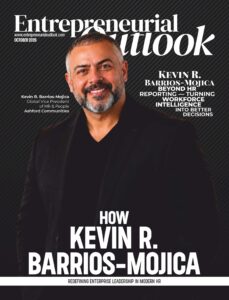
How Kevin R. Barrios-Mojica: Redefining Enterprise Leadership in Modern HR
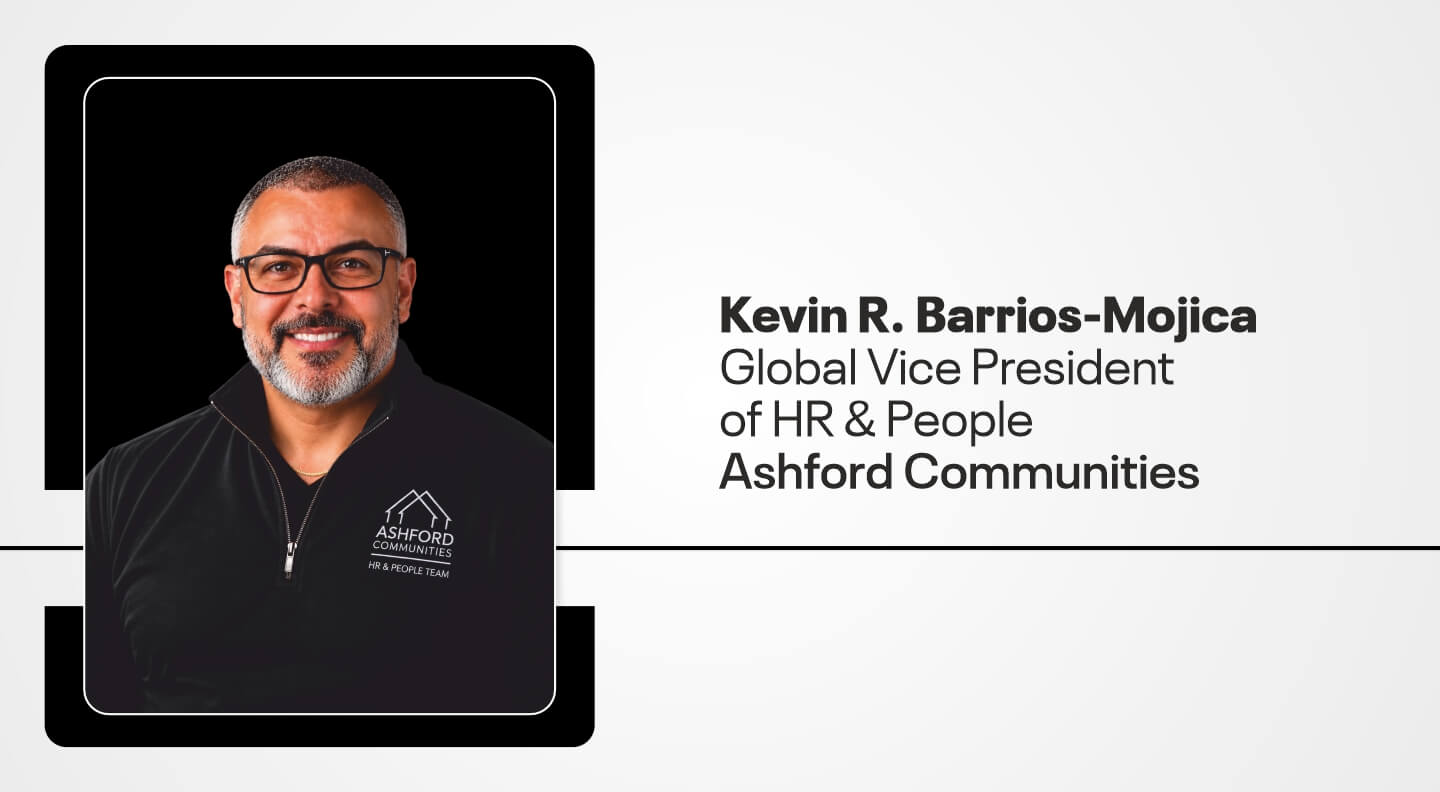
In the rapidly evolving landscape of modern enterprise management, the role of the chief human resources officer has undergone a fundamental, irreversible transformation. No longer confined to the back-office administration of payroll, compliance, and dispute resolution, today’s preeminent HR leaders sit firmly at the executive boardroom table, actively steering organizational strategy, driving financial performance, and architecting resilient workforce ecosystems capable of navigating unprecedented global market disruptions. Among the visionary executives championing this modern paradigm shift is Kevin R. Barrios-Mojica, the Global Vice President of HR & People at Ashford Communities.
Barrios-Mojica’s career trajectory is anything but conventional. Entering the human resources discipline from a strong operational background, he brought with him a deep, pragmatic understanding of business mechanics, revenue dynamics, operational execution, financial pressures, and the tangible realities of ground-level performance. This operational foundation, coupled with nearly three decades of transformative leadership experience, has allowed him to build high-performing HR functions, scale organizations from roughly 100 to over 1,500 employees, navigate complex corporate acquisitions, and advise executive C-suites with an uncompromising blend of commercial fluency and genuine human empathy.
Featured prominently in Entrepreneurial Outlook’s landmark edition, The 10 Most Influential HR Executives to Follow, 2026, Barrios-Mojica embodies the modern ideal of the constructive disruptor. His executive leadership at Ashford Communities – a premier real estate firm dedicated to multi-family housing, demonstrates how a commitment to both people and processes creates an unstoppable flywheel of performance, driving employee retention, enhancing resident satisfaction, and optimizing enterprise profitability. In this exclusive, comprehensive feature, we delve into Barrios-Mojica’s personal journey, his core operational philosophy, his strategic navigation of technological and global expansions, and his profound vision for the next generation of business leaders.
The Unconventional Catalyst: Bridging Operations and Human Capital
For many corporate executives, the path to the C-suite follows a linear, well-trodden trajectory. For Kevin R. Barrios-Mojica, however, the journey into human resources was born out of an unexpected organizational pivot that would ultimately define his signature leadership style.
Looking back at the early milestones of his career, human resources was not part of Barrios-Mojica’s original professional blueprint. Coming into the discipline from an operational background, he possessed a direct, front-line understanding of what it takes to run a business, manage overhead, and meet stringent performance metrics. That non-traditional entry point, which might have seemed like a hurdle in a field dominated by HR traditionalists, quickly emerged as his greatest strategic advantage.
The pivotal catalyst occurred early in his career when a perceptive executive saw latent capabilities in Barrios-Mojica that he had not yet recognized in himself. Recognizing his innate ability to connect with people and analyze operational workflows, she offered him an opportunity to transition into human resources despite his lack of a classical HR background.
What made this transition truly transformative was not simply that a door had been opened, but the profound level of personal and professional investment that followed. This mentor actively coached him, challenged his strategic thinking, sat beside him to demonstrate the intricate mechanics of talent management, and critically, knew precisely when to step back, granting him the autonomy to navigate complex organizational challenges independently.
Reflecting on that formative period nearly thirty years later, Barrios-Mojica recognizes the deeper lesson embedded in that experience: true leadership is the act of recognizing raw potential long before there is a traditional resume or proven track record to substantiate it. That single act of executive trust fundamentally shaped how Barrios-Mojica evaluates talent and develops future leaders today. In his view, the individual with the greatest capacity for transformative impact is rarely the one with the most conventional career path or polished credentials; rather, it is the individual possessing curiosity, resilience, and latent leadership capabilities waiting to be unlocked.
Furthermore, his operational background permanently altered his approach to human resources. Having felt the intense pressures of operational delivery, he understood firsthand how high-level executive directives trickle down to affect the daily lives of front-line workers. Throughout his career, whether building HR infrastructure from the ground up, scaling enterprise workforces, managing corporate mergers, or advising chief executives, Barrios-Mojica has anchored his strategy in that foundational lesson: someone believed in his potential before he fully recognized it himself, and his professional mission is to extend that same transformative belief to others.
Challenging Executive Dogma: The Turnaround of Credibility
A defining moment in Barrios-Mojica’s career, one that solidified his confidence as a strategic business leader, occurred during a high-stakes strategic dialogue with a Chief Executive Officer regarding organizational execution. Facing an aggressive corporate objective, the CEO’s immediate instinct was to default to a traditional, highly rigid management framework, relying on conventional supervision and established operational routines.
Barrios-Mojica, leveraging his operational insights, held a contrasting conviction. He recognized that the organization could achieve far greater agility, employee engagement, and productivity by granting workers increased flexibility and modern tools, balanced with clear, outcome-based accountability. Rather than quietly acceding to executive hierarchy, he directly, yet respectfully, challenged the CEO’s traditional mindset. He proposed a bold alternative: judge the strategic initiative strictly by its tangible business outcomes rather than adherence to traditional procedural dogma.
The CEO accepted the challenge. The organization executed the flexible framework, and the results exceeded initial financial and operational benchmarks. Yet, as Barrios-Mojica notes, the ultimate value of that experience extended far beyond optimized metrics. It fundamentally altered his strategic relationship with the CEO and the broader C-suite. He was no longer viewed merely as an administrative functional head managing workforce policy; he was recognized as a commercial partner capable of reimagining how the business could operate more efficiently and profitably.
That pivotal encounter established a core principle that Barrios-Mojica continues to advocate for emerging leaders: executive credibility is never earned by passive agreement with the most senior voice in the boardroom. True credibility is forged by thoroughly understanding the business problem, presenting a rigorous, well-reasoned alternative, accepting full accountability for the strategic recommendation, and driving the execution required to deliver measurable results.
The Equation of Execution: Simplicity, Compassion, and Co-Ownership
At the heart of Barrios-Mojica’s executive approach lies an elegant, highly practical strategic formula:
𝑃𝑒𝑜𝑝𝑙𝑒+𝑃𝑟𝑜𝑐𝑒𝑠𝑠𝑒𝑠+𝑃𝑒𝑟𝑓𝑜𝑟𝑚𝑎𝑛𝑐𝑒=𝑅𝑒𝑠𝑢𝑙𝑡𝑠People+Processes+Performance=Results
This simple equation encapsulates his holistic view of organizational health. An enterprise can recruit elite talent, but if those individuals are constrained by ambiguous operational processes, bureaucratic friction, and unclear performance expectations, their potential remains dormant. Conversely, even the most sophisticated enterprise systems and automated tools will fail to deliver value without capable workforce execution and accountable leadership.
A central pillar of Barrios-Mojica’s philosophical foundation is the rejection of the false dichotomy between empathy and operational rigor. In many corporate environments, executive leadership falls into the trap of viewing compassion and high accountability as mutually exclusive forces. Barrios-Mojica vehemently rejects this premise. In his leadership framework, maintaining high expectations is not the opposite of caring for employees; it is the ultimate expression of it. Supporting an employee through personal or professional adversity and addressing performance gaps are complementary actions. True care involves setting individuals up for sustainable success, which inherently requires clarity, high standards, and honest feedback.
Simplicity represents another non-negotiable value in Barrios-Mojica’s operational playbook. Over decades of corporate experience, he has observed organizations repeatedly layer policy upon policy, approval upon approval, and meeting upon meeting—all under the guise of governance, until the daily work becomes unnecessarily burdensome. To combat this institutional bloat, he continuously challenges himself, his HR team, and operational managers to interrogate every process: Are we solving a genuine business problem, or are we merely creating another administrative process to manage?
Crucially, Barrios-Mojica asserts that corporate culture and workforce performance are not the exclusive domain of the HR department. While HR provides the strategic frameworks, leadership development programs, and data analytics, employees ultimately experience the organization through their direct supervisors and operational managers. Therefore, HR must be thoroughly embedded in the commercial reality of the enterprise, understanding revenue drivers, balance sheet constraints, customer expectations, and field execution. Barrios-Mojica insists that HR should not be judged merely by operational responsiveness or administrative efficiency, but by whether the entire enterprise is demonstrably stronger, leaner, and more competitive because of its work.
Disproving Conventional Wisdom: Leading Change With People, Not To Them
An old adage in business literature suggests that established, long-tenured employees are inherently resistant to organizational transformation. Early in his leadership journey, Barrios-Mojica admits he gave that assumption more weight than it deserved, operating under the premise that individuals who had performed a role the same way for decades would naturally fight new methodologies.
Years of leading complex enterprise transformations have thoroughly shattered that myth. Barrios-Mojica has discovered that employees of all tenures and age demographics possess a remarkable capacity to adapt their thinking and operational habits, provided executive leadership clearly articulates the strategic “why” and actively invites them to help shape the solution. The fundamental variable governing successful organizational change is not employee age or tenure; it is whether the workforce perceives that transformation is being inflicted upon them or built with them.
When seasoned professionals are granted visibility into the overarching corporate vision and realize that their operational expertise is valued in achieving that vision, their attitude shifts from skepticism to profound engagement. Rather than deploying top-down executive mandates, declaring “Here is the new process”—Barrios-Mojica advocates for a collaborative, inquiry-based approach: “Here is the business outcome we need to achieve. Based on your front-line experience, how can we structure this to work most effectively?”
This deliberate shift from top-down enforcement to collaborative problem-solving uncovers practical operational insights that executive teams sitting in corporate headquarters could never anticipate. While Barrios-Mojica maintains that leadership must retain final decision-making authority and hold teams accountable to metrics, actively involving employees creates deep institutional ownership. In his experience, authentic ownership will always outperform enforced compliance.
Personal Pursuits: Grounding the Executive Mind Through Intellectual Diversity
Executive leadership at the global VP level demands immense cognitive and emotional energy. For Barrios-Mojica, maintaining long-term sharpness and strategic clarity requires a balanced lifestyle grounded in continuous learning, physical discipline, and deep personal self-reflection.
First and foremost, Barrios-Mojica credits his family as the ultimate anchor that keeps him centered amid the demands of corporate leadership. Having navigated intense seasons where professional obligations threatened to overwhelm personal life, he has come to realize that career achievement and personal fulfillment must exist in a state of intentional harmony rather than perpetual competition.
Intellectually, Barrios-Mojica maintains a relentless curiosity that extends far beyond standard corporate literature. He is deeply engaged in the study of psychology, human behavior, neuroscience, and analytical psychology, particularly the theories of Carl Jung regarding self-awareness and the “shadow” aspects of human personality. He observes that while it is exceptionally easy for executives to identify blind spots in others, true leadership maturity requires the far more difficult work of auditing one’s own assumptions, emotional reactions, and cognitive biases. For anyone tasked with leading large, complex human organizations, this internal self-awareness is essential.
Physical discipline also plays a vital role in his daily routine. Through strength training, health optimization, and habit formation, Barrios-Mojica cultivates the physical endurance required for executive performance. Having completed his Bachelor of Arts and Master of Business Administration degrees at Texas A&M University well into his established career, he views fitness and higher education as twin reminders that learning and self-improvement must never cease, regardless of age or corporate title.
Furthermore, Barrios-Mojica actively engages in mentoring emerging professionals and exchanging strategic insights with peers across diverse industries. The overarching theme connecting his personal pursuits is continuous growth. He refuses to allow decades of senior experience to become an excuse for intellectual complacency, firmly believing that cross-disciplinary learning makes him a significantly more perceptive HR leader. Psychology refines his ability to ask penetrating questions; physical training reinforces patience and consistency; technology expands his understanding of what is operationally possible. Together, these varied interests keep him curious, adaptable, and humble.
Navigating Global Scale: Decentralized Execution within a Unified Framework
As Global Vice President of HR & People at Ashford Communities, Barrios-Mojica oversees a complex, geographically distributed operational footprint. The enterprise encompasses a diverse portfolio of multi-family residential properties across Texas, corporate executive functions, and a dedicated, highly specialized operational support team located in India.
Managing across such distinct cultural, operational, and geographical boundaries requires a sophisticated talent strategy. Barrios-Mojica’s primary insight into leading a distributed enterprise is that organizational consistency must never be confused with operational rigidity. Forcing every property and offshore support team to operate identically creates friction and diminishes agility.
To achieve harmony across this international landscape, Barrios-Mojica established a dual-layered operational model: non-negotiable centralized standards governing corporate values, ethical conduct, leadership quality, performance metrics, and baseline employee experiences, paired with decentralized, localized operational execution.
A prime example of this strategy in action is the creation of Ashford University—a decentralized corporate learning framework. Under Barrios-Mojica’s direction, the central HR organization establishes the strategic curriculum, leadership development standards, and performance evaluation criteria, while operational subject-matter experts within specific business units design and deliver the technical, functional training required for their local environments.
This structure fosters shared accountability. Barrios-Mojica candidly acknowledges that HR cannot—and should not—claim subject-matter expertise in every operational niche of multi-family property management. While enterprise technology platforms provide centralized visibility into recruitment funnels, learning metrics, and turnover rates, he insists that digital dashboards must augment, rather than replace, direct dialogue with property-level managers and offshore team members. Ultimately, he measures HR success not by whether every department completed a uniform administrative process, but by whether workforce capabilities have expanded, property managers are leading more effectively, and residential communities are achieving superior financial and operational results.
Balancing Global Centralization and Local Autonomy
A persistent challenge in global enterprise design is determining precisely which operational levers should be centralized at corporate headquarters and which should be delegated to field leaders. Barrios-Mojica approaches this challenge with rigorous architectural discipline.
In his operational framework, centralization is essential for regulatory compliance, workforce data analytics, compensation governance, core technology infrastructure, and baseline enterprise policies. However, centralizing day-to-day operational decision-making creates severe bottlenecks that paralyze front-line staff who are closest to residents and daily property challenges.
To maintain organizational agility, Barrios-Mojica empowers property-level community leaders with clear grants of authority, enabling them to make timely operational decisions within pre-defined financial and policy parameters. Achieving this balance requires comprehensive leadership coaching, transparent governance boundaries, and a culture that favors empowering leaders over requiring endless administrative approvals.
This same principle governs Ashford’s global integration with its India-based support teams. Ensuring seamless collaboration across vastly different time zones and operational environments demands robust communication protocols and standardized quality benchmarks. Yet, it also requires executive empathy and mutual respect, recognizing that offshore teams require tailored workflows and support structures to excel. Barrios-Mojica continually prompts his HR leadership team to ask field and global managers a fundamental question: “What support can HR provide to make your team more effective today?” rather than “What compliance reports do you owe us?” This service-oriented, decentralized approach keeps the enterprise lean, highly responsive, and free from corporate bureaucracy.
Aligning Employee and Resident Experiences: The Operational Flywheel
In the multi-family housing sector, corporate strategy is ultimately validated at the property level. Residents do not evaluate an enterprise based on executive press releases or corporate mission statements; their perception is shaped entirely by their daily interactions with leasing professionals, maintenance technicians resolving service tickets, and community managers handling resident concerns. Residents are entrusting the company with their home.
Recognizing this operational reality, Barrios-Mojica operates under the firm conviction that the internal employee experience and the external resident experience are deeply intertwined. At Ashford Communities, this principle is operationalized through The Ashford Way, a culture framework built upon four actionable behavioral pillars:
- Stay Professional
- Own It
- Make It Personal
- Do What You Say
Barrios-Mojica insists that these four behaviors must govern internal leadership practices just as rigorously as they govern resident-facing service delivery. An organization cannot realistically demand that front-line workers deliver empathy, accountability, and excellence to customers if those same workers experience neglect, ambiguity, and heavy-handed management from their corporate leaders.
When Ashford invests in supporting, training, and empowering its workforce, employees deliver exceptional service to residents. Superior resident experiences lead to higher occupancy, stronger lease renewals, and optimized financial returns. These financial results, in turn, generate the capital necessary for the enterprise to continuously reinvest in employee compensation, property improvements, and advanced technological infrastructure.
This flywheel model fundamentally redefines how HR views its core functions. Recruitment is no longer viewed as merely filling empty requisitions; learning and development is no longer about tracking course completion rates; performance management is no longer an annual paper-pushing exercise. Under Barrios-Mojica’s leadership, HR actively correlates talent metrics—such as voluntary turnover and time-to-productivity—directly with property-level outcomes, including service-ticket turnaround times, resident retention rates, and net operating income (NOI). When a specific property experiences high staff turnover alongside declining resident satisfaction scores, Barrios-Mojica’s team analyzes these trends as interconnected symptoms of a single operational challenge.
Redefining Leadership Success Through Holistic Metrics
This tight coupling of employee and customer outcomes has led Barrios-Mojica to reshape how leadership success is evaluated across Ashford Communities. In traditional real estate environments, property managers are often judged solely on short-term financial targets. However, Barrios-Mojica argues that a manager who hits a quarterly budget target while leaving behind a burnt-out team, high employee turnover, and dissatisfied residents is quietly destroying long-term enterprise value.
Conversely, an operational leader who fosters a positive workplace culture, invests in team development, and maintains high service standards creates compounding value that stabilizes the property’s long-term balance sheet. To capture this complete picture, Barrios-Mojica integrates human capital metrics directly alongside financial performance indicators in executive reporting. By analyzing how rapidly maintenance teams resolve service tickets, how residents rate those interactions, how long employees remain with the firm to build property-specific expertise, and how effectively managers coach their teams, Ashford gains an early-warning system that identifies operational friction long before it impacts the bottom line.
Mastering Disruption: Navigating Systems Modernization and Global Shifts
The modern human resources landscape has undergone unprecedented structural shifts in recent years, transitioning rapidly from administrative oversight to digital fluency and strategic integration. At Ashford Communities, the most challenging strategic shift led by Barrios-Mojica was executing a complete overhaul of the enterprise’s HR operating model—moving from a fragmented, vendor-reliant administrative structure to an integrated, technology-enabled, internal HR function.
When Barrios-Mojica joined Ashford, the organization relied on a Professional Employer Organization (PEO) model alongside several disconnected software applications. While PEO arrangements can support smaller enterprises, they often limit process ownership, data visibility, and strategic customization as companies scale. Recognizing these constraints, Barrios-Mojica conceptualized and executed a migration to a dedicated Human Resources Information System (HRIS) environment, bringing workforce management directly under internal control.
While this strategic move yielded over $350,000 in immediate, recurring annual savings, Barrios-Mojica stresses that the financial ROI was merely a secondary benefit. The true strategic value lay in gaining total ownership of recruitment workflows, performance management architectures, employee learning environments, and workforce analytics.
However, executing an enterprise-wide technology migration while maintaining uninterrupted operations across payroll, benefits, and hiring is a complex undertaking. Barrios-Mojica candidly acknowledges that digital transformations are rarely seamless. Communicational misalignments, data migration challenges, and software learning curves occurred during the rollout. In his view, executive leadership requires owning these operational hurdles transparently, communicating candidly with affected teams, and remaining deeply engaged in field execution until stability is restored.
Leading Through Economic Adversity with Dignity and Compassion
Perhaps the most grueling test of an HR leader’s character occurs during economic downturns when business viability demands tough structural adjustments. During a challenging economic cycle, Barrios-Mojica was called upon to help guide an executive decision to transition select operational support functions to offshore teams in order to protect the company’s financial sustainability.
From a balance sheet perspective, the strategic imperative was clear: the business was required to optimize payroll overhead to survive an unforgiving market environment. However, from a human perspective, the decision was heavy. Several of the domestic employees impacted by the restructuring were long-tenured contributors, highly respected colleagues, and true brand ambassadors who had poured years of effort into the company.
In navigating this delicate transition, Barrios-Mojica refused to retreat behind clinical corporate platitudes like “it’s just business.” He asserts that such phrases are cowardly mechanisms used by management to detach from the human impact of their decisions. While the restructuring was a necessary commercial move, its personal consequences for impacted workers were real and profound.
Barrios-Mojica viewed his core responsibility during that crisis as ensuring that executive leadership evaluated every available alternative with extreme rigor, and once the decision was finalized, executing the transition with absolute transparency, honesty, and deep human dignity. He provided clear explanations without false assurances, offered transition support, and treated every outgoing employee with profound respect. That experience reinforced a core belief for Barrios-Mojica: an HR leader’s true character is not revealed when celebrating growth and record profits, but in how compassionately and respectfully they treat people during moments of severe organizational hardship.
Equipping the Future Workforce: The Role of Artificial Intelligence
As artificial intelligence, algorithmic automation, and rapid demographic shifts redefine enterprise operations globally, human resources stands at a critical historical inflection point. Barrios-Mojica views AI not as a mere incremental software upgrade, but as one of the most profound opportunities the HR profession has ever had to fundamentally rethink the nature of human work.
Having managed the transition of HR from physical paper filing systems to integrated cloud platforms and predictive analytics, Barrios-Mojica observes that the current AI revolution is categorically different. It directly challenges traditional job architectures, forces organizations to re-evaluate core skill requirements, and alters the division of labor between human cognition and machine efficiency.
At Ashford Communities, Barrios-Mojica has spearheaded the exploration and integration of AI tools across talent acquisition, employee communications, performance tracking, and property operations. For example, the implementation of specialized AI platforms like Elise AI has transformed resident interactions and maintenance workflow automation. Furthermore, his team is continuously evaluating AI capabilities within their core HRIS to detect subtle operational friction points and emerging performance trends long before they escalate.
However, Barrios-Mojica maintains a healthy, pragmatic skepticism regarding technology hype. He insists that purchasing software tools does not equate to organizational transformation. Every technological investment must be evaluated against strict operational questions: Does this tool eliminate administrative drag? Does it enhance data accuracy? Does it accelerate response times? Crucially, does it free up capacity for employees to engage in higher-value, strategic work?
When automation successfully eliminates repetitive transactional tasks, executive leadership faces a choice: automatically eliminate headcount, or strategically redesign roles to elevate human capabilities. While workforce downsizing may sometimes be financially necessary, Barrios-Mojica argues that the far more valuable long-term opportunity lies in elevating employees toward roles requiring complex human judgment, relationship-building, and creative problem-solving.
The Immutable Necessity of Human Judgment in an AI Era
To ensure that AI deployment remains ethically grounded and aligned with business goals, Barrios-Mojica emphasizes the need for strong organizational guardrails surrounding data privacy, algorithmic fairness, and decision-making transparency.
He asserts a fundamental principle: while an algorithm can analyze vast datasets and identify subtle operational patterns at unprecedented speed, it can never be held accountable for an employment decision. Responsibility remains uniquely human. Technology must be leveraged to inform and enhance human judgment, never to replace it outright.
Contrary to widespread industry fears that AI will render the human resources discipline obsolete, Barrios-Mojica offers a bold, optimistic counter-perspective: AI will elevate and expand the HR profession. While automation will absorb routine administrative transactions, it will simultaneously create demand for sophisticated HR capabilities that barely existed a decade ago. Organizations will increasingly require strategic HR leaders who can:
- Translate business strategies into agile workforce capabilities.
- Audit algorithmic models for subtle systemic bias and operational fairness.
- Redesign organizational workflows to optimize human-machine collaboration.
- Coach executive leadership through continuous operational change.
- Build rapid, continuous skill-development ecosystems.
For HR professionals who define their enterprise value strictly by the manual transactions they process, automation will inevitably pose a threat. However, for leaders who define their value by the commercial problems they solve and the strategic judgment they bring, AI represents an extraordinarily powerful partner.
Measuring Human Capital ROI: Bridging HR Strategy to Boardroom Outcomes
A persistent critique of traditional human resources is its historic failure to articulate its value in the quantitative language of the corporate boardroom. Early in his career, Barrios-Mojica admits he followed standard HR practice by reporting surface-level activity metrics, number of hires made, training modules completed, and performance appraisals submitted. While those figures tracked administrative output, they failed to answer the fundamental question demanding executive attention: What changed for the business?
Today, Barrios-Mojica approaches human capital investments by working backward from concrete commercial problems. When addressing high employee turnover, for example, his analysis extends far beyond the HR department. He calculates the total operational cost of replacing personnel, the revenue lost during productivity ramp-up periods, the overtime expense incurred by remaining staff, and the downstream impact on service quality and customer retention.
Through this commercially disciplined approach, Barrios-Mojica has driven remarkable, quantifiable turnarounds across his career:
- Reducing Voluntary Attrition: At Ashford Communities, strategic workforce initiatives contributed to lowering voluntary employee turnover from a high of 102% down to 70% over a three-year period.
- Extending Employee Tenure: Average staff tenure was extended from approximately two years to over five years, preserving institutional knowledge and operational stability.
- Accelerating Hiring Velocity: Time-to-fill for critical front-line hourly roles was compressed from roughly 45 days down to 15 days, dramatically reducing operational downtime.
- Direct Balance Sheet Savings: The migration from a PEO to an internal HRIS generated over $350,000 in recurring annual savings at Ashford, building upon an earlier career consolidation that delivered $750,000 in realized annual savings.
Furthermore, Barrios-Mojica utilizes advanced productivity metrics such as Revenue Over Payroll (ROP) to evaluate labor efficiency. However, true to his balanced methodology, he cautions against analyzing ROP in isolation. Aggressively cutting payroll overhead will instantly improve an ROP ratio on paper, but if that reduction degrades resident service quality, increases employee burn-out, and triggers customer churn, it represents a net destruction of enterprise value.
Barrios-Mojica demands that HR metrics be presented directly alongside financial and operational outcomes. If a leadership development framework is truly effective, its validation must appear in strengthened operational execution, increased internal promotion rates, elevated customer satisfaction scores, and improved net operating income. HR no longer needs to plead for a “seat at the executive table”; the real mandate is delivering tangible commercial value once positioned there.
Defining the Top 1% of HR Executives for the Next Decade
Looking ahead toward the next decade of corporate leadership, Barrios-Mojica projects that the profiles of successful C-suite HR executives will look radically different from traditional HR leaders of the past. While foundational knowledge of labor law, employee relations, and compliance remains necessary, it now represents mere table stakes.
Barrios-Mojica outlines five non-negotiable capabilities that will distinguish the top 1% of global HR leaders in the coming decade:
- Commercial and Financial Fluency: Future HR leaders must possess a deep, rigorous understanding of corporate finance, revenue engines, profit margins, capital allocation, risk management, and macro-economic forces. They must actively contribute to shaping business strategy itself, rather than merely executing the workforce implications after executive decisions are finalized.
- Technological and Algorithmic Judgment: HR executives must move beyond being passive consumers of technology to become sophisticated evaluators of AI, automation architectures, and predictive workforce analytics—understanding both their massive potential and inherent limitations.
- Advanced Organizational Architecture: As technological capabilities rapidly redefine the economics of labor, HR leaders must excel at restructuring roles, reallocating decision rights, optimizing human-machine workflows, and designing agile enterprise structures.
- Courageous and Transparent Leadership: Executive HR leaders must possess the moral courage to respectfully challenge C-suite colleagues, confront entrenched yet inefficient corporate practices, and candidly dismantle internal HR initiatives when data proves they are failing to deliver business value.
- Constructive Disruption Paired with Humility: The elite HR leader must act as a constructive disruptor, continually questioning whether traditional operational assumptions remain valid, while maintaining the personal humility to continuously learn, adapt, and acknowledge gaps in their own knowledge.
Barrios-Mojica further envisions a future where highly effective HR departments operate with leaner, far more specialized teams. As automation absorbs transactional workloads and operational managers assume direct ownership of day-to-day team leadership, the HR function can shed administrative bloat. This lean architecture elevates HR, allowing senior personnel to focus entirely on executive coaching, strategic workforce planning, high-level talent architecture, and organizational change management.
Strategic Mindset Shifts for Emerging HR Leaders
For mid-level HR managers and ambitious professionals aspiring to reach global VP and C-suite roles, Barrios-Mojica offers a fundamental, career-defining mindset shift: Stop viewing yourself exclusively as an HR professional, and start operating as a business leader who happens to specialize in people.
To execute this mental transition, emerging leaders must purposefully venture outside the traditional boundaries of the HR discipline:
- Master the Language of Finance: Learn to read balance sheets, income statements, and cash flow reports fluently. Spend structured time with finance, operations, sales, and technology executives to understand the primary commercial metrics driving their daily decisions.
- Seek High-Friction Operational Assignments: Actively volunteer for complex, ambiguous corporate projects such as building new functional units, integrating corporate acquisitions, or restructuring operational workflows, where success requires exercising strategic judgment rather than citing corporate policy manuals.
- Cultivate Truth-Telling Mentors: Surround yourself with senior leaders who will offer candid performance feedback, challenge your strategic assumptions, and push you out of your professional comfort zone.
- Communicate Exclusively in Business Outcomes: When proposing HR initiatives to C-suite executives, frame the business case entirely around outcomes: explicitly outline what operational problem will be solved, what financial investment is required, what commercial risks are involved, and precisely how ROI will be measured.
At the same time, Barrios-Mojica cautions emerging leaders never to erase their distinct professional identity in an effort to assimilate into boardroom culture. The unique value an HR executive brings to executive leadership is precisely their deep, nuanced understanding of human behavior and organizational dynamics. The ultimate competitive advantage lies in seamlessly fusing that human empathy with sharp, uncompromising commercial acumen.
A Lasting Legacy: Human Impact, Professional Elevation, and Unwavering Integrity
When reflecting upon the ultimate legacy he wishes to leave across the organizations, teams, and communities he has served, Kevin R. Barrios-Mojica’s focus returns squarely to human transformation.
While building high-performing HR infrastructures, driving enterprise digital migrations, achieving significant financial savings, and earning national workplace recognition are proud professional milestones, they pale in comparison to the human impact of leadership. For Barrios-Mojica, true legacy is measured in the lives of individuals: front-line workers who were supported to become executive leaders, operational managers who gained the confidence to navigate complex challenges, and professionals who discovered capabilities within themselves that they never knew existed.
Furthermore, he remains deeply committed to elevating the broader HR discipline, pushing the profession toward greater financial literacy, higher technological competence, and uncompromising accountability for tangible business outcomes, all while preserving the fundamental humanity that sits at the heart of work. In his view, commercial performance and human empathy are not opposing forces; when synthesized effectively, they create a powerful, enduring enterprise model.
For colleagues and teams who have worked alongside him throughout his career, Barrios-Mojica hopes to be remembered through five core attributes: as a leader who was respectful, forward-thinking, passionate, a constructive disruptor, and a dedicated business coach. Respectful in recognizing the inherent dignity of every individual, even during tough performance conversations or corporate restructurings; forward-thinking in refusing to let yesterday’s successful tactics become tomorrow’s operational limitations; passionate in pushing for excellence and rejecting mediocrity; disruptive in courageously dismantling practices that no longer serve the enterprise; and coaching-minded in empowering leaders to discover optimal solutions rather than simply enforcing administrative rules.
Guiding Principles for the Next Generation of Professionals
In his final message directed to young professionals and emerging talent entering the rapidly shifting global workforce of today, Kevin R. Barrios-Mojica offers a timeless, deeply empowering principle:
Never allow your current circumstances to define your ultimate potential.
Reflecting on his own non-traditional journey from an operational background to the global C-suite of a major real estate enterprise, he reminds emerging professionals that a career rarely follows a straight, perfectly predictable path. While receiving an initial opportunity from a mentor or sponsor is vital, taking relentless personal ownership of what happens next is what truly determines long-term success.
Barrios-Mojica urges the next generation to cultivate an insatiable intellectual curiosity. Ask deep questions, master how the broader enterprise generates value, embrace assignments that induce professional discomfort, and accept full, unvarnished accountability when mistakes occur.
In a modern corporate culture increasingly obsessed with personal branding, social media presence, and curated digital image, he offers a vital counter-weight: focus relentlessly on building a real reputation rather than maintaining a superficial image. A superficial image is easily manufactured; a genuine reputation is earned slowly through consistent follow-through, unwavering ethical integrity, deep personal respect for colleagues, sound operational judgment, and becoming an individual upon whom others can depend unconditionally when stakes are high.
Finally, Barrios-Mojica calls upon future leaders to adopt a sophisticated understanding of true adaptability. Adaptability is not passive compliance with every organizational change; it is the capacity to understand the deeper purpose behind a strategic shift, rapidly master required new capabilities, and contribute constructively even when the destination is not yet fully visible. Look for complex problems worth solving, align with mentors worth learning from, build genuine bridges with colleagues across every organizational department, and remember that professional ambition achieves its highest expression when paired with personal humility. In the ultimate test of a career, deep operational competence and unyielding strength of character will always prove infinitely more durable than a corporate title.