
Cathy Ross: The Quiet Defender of the Digital Economy
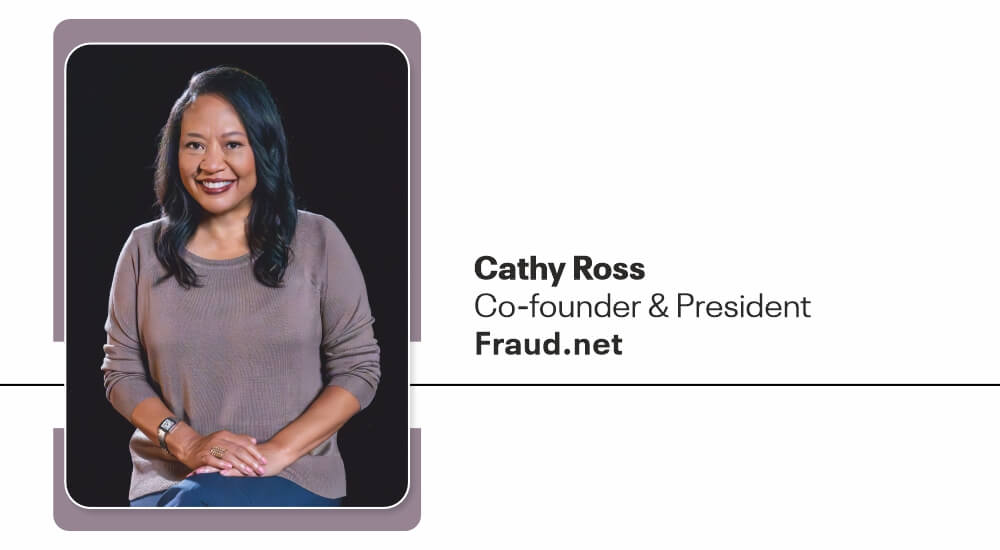
Every era has its quiet defenders, individuals who work behind the scenes to keep the systems we rely on safe and trustworthy. In today’s fast-moving world of digital commerce, that defender is Cathy Ross, co-founder and president of Fraud.net. Her leadership isn’t loud or showy; it’s rooted in clarity, empathy, and an unshakable belief that innovation and integrity coexist. At Fraud.net, Ross turns complex technology into a force for good – protecting businesses, empowering customers, and restoring confidence in the digital economy.
Ross built her career by blending curiosity with purpose. Her journey began in the structured halls of J.P. Morgan, where she mastered the language of finance, understanding how capital moves, how risk is managed, and how systems can either drive or derail growth. But beneath that structured world was a restless entrepreneurial spirit, one that wanted not just to analyze businesses but to build them from the ground up.
That spirit led her into e-commerce, where she discovered opportunity and vulnerability. As her businesses grew, so did the threat of fraud, the invisible enemy eroding trust in digital transactions. During long nights of solving problems with outdated tools, an idea began to take shape. Ross realized fraud wasn’t just her problem; it was everyone’s. That realization inspired her to create Fraud.net, an AI-powered platform that delivers real-time fraud and risk intelligence, helping enterprises detect threats, maintain compliance, and keep the digital economy safer for everyone.
Lessons from Every Venture
Ross’s journey through finance and e-commerce became the foundation for how she leads at Fraud.net. Each company she built taught her something different. Finance sharpened her focus on precision, systems, and risk, while e-commerce taught her empathy through the daily battles of fraud prevention. She remembers the difficult conversations with customers whose legitimate orders were declined or whose accounts were compromised. Those experiences, she says, leave a lasting impression.
Ross believes in listening first and co-creating solutions with clients rather than building in isolation. “I’ve been in their shoes,” she says, “so I know how it feels when the tools don’t work how they should.” Her leadership balances finance’s precision with entrepreneurship’s flexibility, designing systems that stay accurate, dependable, and agile amid fraud’s constant evolution.
Navigating the Tech and Finance World as a Woman
In her early career, Ross often found herself the only woman in the room, a reality that initially felt daunting. Mistakes carried extra weight, not just personally but symbolically, as if they might reflect on women in general. Over time, she transformed that pressure into purpose. Rather than viewing underrepresentation as a setback, she began to see it as a chance to pave the way for others.
Her involvement in initiatives like Mastercard’s “Her Ideas” program connected her with inspiring mentors and peers who shared her drive. She made it a point to step into the spotlight, speaking on panels, giving interviews, and showing that women belong in leadership roles within fintech and cybersecurity. Ross also discovered the power of networks, understanding that in male-dominated industries, success often depends on community. Today, she actively mentors and supports women entering these fields, ensuring the door she walked through stays open for others.
The Spark Behind Fraud.net
The creation of Fraud.net began with firsthand frustration. Ross remembers long days trying to stop fraudulent transactions without turning away real customers. Each false decline meant lost revenue; each fraudulent order was a direct financial hit. The tools available then were scattered. One monitored IPs, another tracked transaction speed, yet none connected the dots. “It felt like trying to fight a wildfire with a garden hose,” she recalls.
That experience led to a clear vision: build a unified, AI-powered platform capable of seeing the whole picture in real time. Fraud.net was born from that idea, a system designed to protect businesses (and subsequently, consumers) while enabling growth. Ross sees the company’s mission as deeply personal. Her purpose has always been to help enterprises grow safely, and Fraud.net is the realization of that goal, offering solutions she once wished she had.
Staying Ahead in the Fight Against Fraud
Fraud, Ross says, is a moving target. It never stops evolving, and neither can the people fighting it. To stay ahead, Fraud.net operates on three guiding principles: adaptability, intelligence, and collaboration. The company’s platform learns and adapts continuously, using AI models that evolve with each new data point. It aggregates thousands of real-time signals, such as device patterns, behavioral insights, and global blacklists, into one cohesive system that spots threats faster than humans ever could.
Equally important is collaboration. Fraud.net partners with data providers, enrichment platforms, and clients worldwide, creating what Ross describes as “collective intelligence.” Rather than going it alone, her team builds a community that shares knowledge and advances together. It’s a more comprehensive defense that moves faster, learns quicker, and grows smarter with every interaction.
Turning the Tide with Technology
Ross lights up when she talks about the real-world impact of Fraud.net’s technology. One story that stands out involves a client in the fast-growing “buy now, pay later” sector. The company was being hit hard by account takeovers, with criminals breaking into user accounts, stealing identities, and leaving behind serious financial losses. “Within weeks of deploying Fraud.net, those attacks dropped by about ninety percent,” she recalls.
“That wasn’t just a technical success; it was the difference between a company fighting to survive and one ready to scale confidently.”
Another client, a global payment processor, faced the opposite issue. Fear of fraud had driven their systems to overcorrect, mistakenly flagging good customers as suspicious. The result was lost revenue and frustrated users. After integrating Fraud.net’s AI-driven platform, they saw false positives fall by an astonishing ninety-eight percent. “Imagine the impact of welcoming back almost every legitimate customer without letting in the bad actors,” Ross says. “That’s the beauty of this technology. It doesn’t just block fraud, it fuels growth.”
The New Frontlines of Fraud
As payment technologies evolve, so do the risks. Ross sees the current landscape as both thrilling and treacherous. “Every innovation, from digital wallets and BNPL to instant cross-border payments, opens new doors for consumers and new entry points for fraudsters,” she explains. “They move fast because regulation and best practices always take time to catch up.”
She identifies two areas of particular concern. The first is synthetic identity fraud, where criminals combine real and fake information to create entirely new digital personas. The second is account takeovers, which continue to rise as stolen credentials circulate endlessly online. Artificial intelligence, especially generative AI, is rapidly exacerbating these risks through enabling deepfakes, automating card testing at scale, and fueling new forms of refund and policy abuse.
“The biggest shift,” Ross says, “is that fraud is no longer just transactional, it’s systemic.” The solution, she believes, lies in connected intelligence. “Businesses can’t afford isolated tools anymore – they need connected, real-time systems that see the whole picture.”
Innovation and Integrity
Ross is the first to admit that innovation in finance and payments can’t come at the expense of compliance. “We think about this constantly,” she says. “In our world, compliance isn’t a checkbox; it’s part of the architecture.”
Fraud.net’s platform is built to be modular and adaptable, allowing clients to meet their specific regulatory needs while still benefiting from the latest advances in AI and machine learning. In regions where data residency rules are strict, the system can be configured to meet those requirements without compromising speed or security. Every action within the platform is transparent and traceable, giving regulators and compliance teams full visibility into decision-making.
Ross views compliance not as a constraint but as a creative challenge. “If you design with regulation in mind from the beginning, you don’t have to slow down later,” she explains. “You can innovate responsibly and still move fast.”
Humans and Machines Working Side by Side
Artificial intelligence is already reshaping fraud prevention, but Ross believes the fundamental transformation is just beginning. The sheer scale of data being produced by businesses today is beyond what humans alone can analyze. Fraudsters, she points out, are already using automation and AI to find new vulnerabilities. “To keep up, we need systems that learn in real time, recognize subtle patterns, and act instantly,” she says.
But Ross doesn’t see AI as a replacement for people. “The best fraud prevention happens when AI’s speed and scale meet human intuition and context,” she says. “Machines can flag what looks suspicious, but humans bring the judgment to decide why it matters and what to do next.”
Her vision for the future is one of collaboration, not competition. “It’s not humans versus machines,” she emphasizes. “It’s humans with machines, working together to create a safer, smarter digital world.”
Building an Inclusive Culture from the Inside Out
At Fraud.net, diversity isn’t a buzzword, but a deliberate practice. Ross and her team have woven inclusion into the company’s fabric, starting with recruitment. They actively seek talent beyond traditional pools to reach broader, more diverse networks. “It’s not just about who’s at the table,” Ross explains. “It’s about making sure every voice at that table is heard and valued.”
She also leads by example, remaining an active presence in the global #WomenInTech community. Through visibility and advocacy, she demonstrates that diversity and inclusion are not abstract ideals but core to sustained success. “We’re not perfect,” she says honestly, “but we’re committed, and that commitment shows up in the culture we’ve built.”
Guiding the Next Generation of Women in Tech
When Ross talks to young women entering fintech or cybersecurity, her advice is grounded in experience and realism. “Get close to the problems,” she advises them. “Don’t just chase the shiny new technology. Go where the real business challenges are and learn them deeply.” To her, understanding the nuances of how fraud, finance, and technology intersect created true expertise and lasting value.
Her second piece of advice centers on building relationships with intention. She credits much of her success to mentors, allies, and peers who believed in her potential and challenged her to grow. “No one does this alone,” Ross notes. “Your network is both your safety net and your launchpad. And when you’re in a position to do so, be that same source of support for someone else.”
Finally, she encourages women to step into the spotlight. She believes visibility is vital, whether joining a panel discussion, publishing insights, or leading an initiative. “It can feel uncomfortable at first,” she admits, “but visibility builds credibility, and it shows other women that they belong here too.”
A Legacy of Safety and Opportunity
When Ross reflects on her legacy, her vision extends beyond the boardroom. Her foremost goal: to make the digital economy safer for everyone. “Fraud isn’t going away,” she says, “but if we can make it harder, riskier, and less profitable, then we’ve made a real difference.” In her view, each fraudulent transaction prevented protects more than just financial data. It safeguards livelihoods, identities, and trust in the digital world.
The second part of her legacy is deeply personal. She hopes her journey helps open doors for future leaders, particularly women and those from underrepresented backgrounds, to find their place in fintech and cybersecurity. “If my visibility and leadership make it even a little bit easier for the next generation to thrive,” she says, “then that’s something worth leaving behind.”