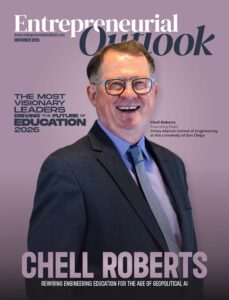
Rewiring Engineering Education For the Age Of Geopolitical AI
By any standard historical metric, the classic architecture of higher education was designed to withstand time, not race against it. Rooted in centuries-old European models and constructed around slow-moving academic silos, the traditional university paradigm was built to preserve knowledge rather than continuously dismantle and rebuild it.
Yet, as the global economy hurtles through the mid-2020s, that legacy blueprint is fracturing.
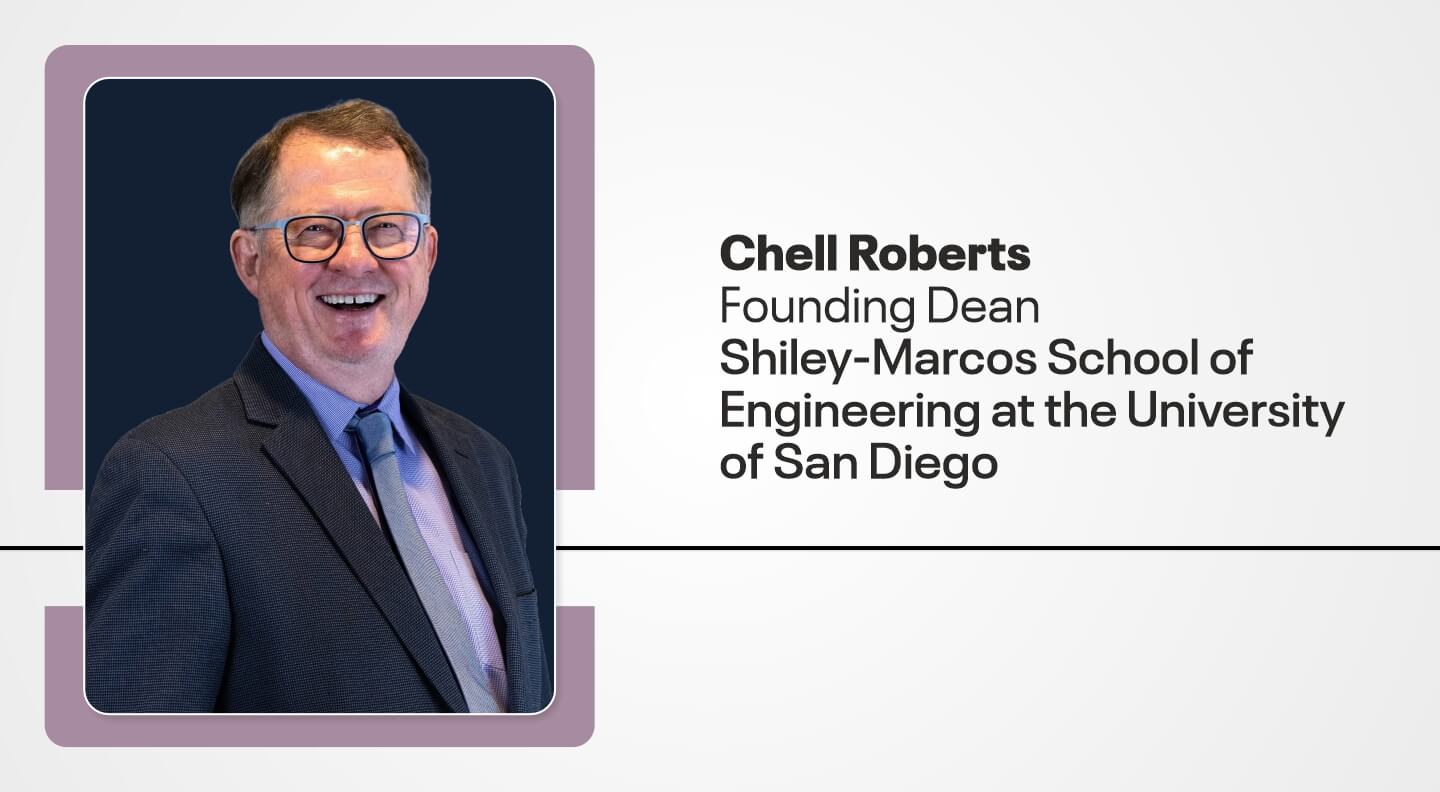
Enter Chell Roberts, the founding dean of the Shiley-Marcos School of Engineering at the University of San Diego (USD). Across a distinguished four-decade career spent at the convergence of higher education, industrial engineering, and cross-sector innovation, Roberts has consistently refused to treat engineering as a mere sequence of technical equations. Long before generative artificial intelligence disrupted the modern workforce, he recognized that the true bottleneck in technical education wasn’t a lack of mathematical rigor, it was an overreliance on rigid, isolated frameworks that detached technical mastery from human context.
As the leader who built the Shiley-Marcos School of Engineering from a clean slate, Roberts has spent his tenure championing a radical paradigm shift: the concept of the Changemaker Engineer. By systematically weaving liberal arts, social responsibility, and real-world industry practice directly into a dual BS/BA curriculum, he has transformed USD’s program into a high-impact laboratory for sociotechnical leadership.
In this exclusive executive feature, Dean Chell Roberts offers an unvarnished analysis of the structural frictions facing modern higher education. He explores the rise of geopolitical AI, outlines the necessity of stripping away obsolete academic frameworks, and shares hard-won strategic insights on how enterprise partners and academic leaders can co-develop the next generation of agile, ethical tech talent.
The Evolution of the Changemaker Engineer
When Roberts stepped into the role of founding dean at the Shiley-Marcos School of Engineering, he spearheaded a National Science Foundation grant titled Developing Changemaking Engineers. Acting as Principal Investigator alongside a curated team of department chairs and administrators, his mission was clear: broaden the engineering canon and humanize technical education.
When Roberts launched the Changemaking Engineering initiative, the team focused on redefining what skills an engineer must possess to address complex global challenges. The primary objective was to render engineering deeply sociotechnical by:
- Humanizing the Discipline: Guaranteeing that emerging technologies actively serve the real-world needs of diverse, underserved communities.
- Balancing Design Paradigms: Engineering solutions that demonstrate social responsibility alongside uncompromising technical precision.
- Systemic Recalibration: Shifting the educational focus equally toward the people utilizing technology and the complex systems building it.
“The challenging part,” Roberts reflects, “is that executing this vision requires faculty to possess a different knowledge set than what is routinely provided in traditional engineering PhD programs.”
To overcome this, institutional efforts centered on recruiting forward-thinking faculty, investing heavily in ongoing training, rebuilding curricula from the ground up, and establishing a culture where sociotechnical design serves as the foundational baseline rather than an optional elective.
While changemaking once primarily implied social entrepreneurship, Roberts argues that its definition has drastically expanded in 2026. Today, changemaking demands a total overhaul of higher education’s underlying operational framework, ensuring that institutions adapt as rapidly as the technological landscape around them.
Navigating Disruption: The Era of Geopolitical AI
While many academic leaders point to artificial intelligence as a localized disruption, Roberts views it through a broader, more strategic lens: the rise of geopolitical AI in higher education.
Today, AI adoption, governance, and talent acquisition are no longer simple administrative or pedagogical choices. Instead, they are actively dictated by global power dynamics, forcing institutional leaders to manage intense friction between external market demands and internal institutional resistance.
Reconciling Industry Demand with Academic Transformation
Corporate partners and industry advisory boards expect engineering schools to graduate “AI-native” and “AI-adaptive” professionals who are technically agile, reflective, and ethically grounded. Conversely, academic faculty often take a more cautious approach, examining the philosophical implications, historical precedents, and workforce impacts of rapid automation.
“As a strategic leader,” Roberts notes, “my role is to transform our educational model to embed AI deeply into our curriculum while supporting faculty through this transition, helping them protect the vital human element of learning.”
Navigating Fractured Governance and Talent Mobility
Beyond internal dynamics, external forces are squeezing academic innovation:
- Workforce Displacement: Because national security and geopolitical leverage are fundamentally linked to economic resilience, governments are pressuring universities to rapidly align curricula with national AI literacy goals. Degree viability now hinges on institutional agility.
- Fractured Governance: Universities attempting to deploy generative AI across administrative and academic operations must navigate a complex, highly fragmented global patchwork of data privacy laws and compliance mandates.
- Research Bottlenecks: Elite research relies heavily on a small, international pool of PhD candidates and post-doctoral scholars. Heightened geopolitical tensions, visa restrictions, and increased intellectual property scrutiny threaten to constrict this vital talent pipeline precisely when global technological development is accelerating.
Dismantling Legacy Structures in Higher Education
Industry leaders have long argued that higher education moves too slowly to keep pace with enterprise demands. With four decades of perspective across panels, boards, and academic appointments, Roberts acknowledges that this criticism is a perennial theme, one rooted deep in the history of industrial advancement.
The Historical Evolution of Engineering Education
As mass manufacturing replaced individual artisans during the Industrial Revolution, the need for management principles rooted in hard science led to the creation of engineering science. Government investment during global conflicts further locked this research-heavy model into place, turning engineering into a prime catalyst for upward economic mobility.
In recent years, the discipline has adapted by embracing venture capital, startups, and commercialization. However, Roberts identifies two fundamental economic barriers that continue to slow academic evolution:
- The Scaling Dilemma: Unlike corporate enterprises that achieve massive economies of scale through ROI-driven operational efficiency, higher education has historically struggled to scale its core delivery model.
- The Mission Conflict: While modern universities must operate with business discipline, their core ethos remains tied to a public mission: uplifting communities and educating citizens rather than maximizing short-term corporate margins.
Photo caption: Dean Chell Roberts (left) and benefactress Darlene Marcos Shiley (center) alongside students in Donald’s Garage prototyping hub, named after her late husband and biomedical inventor, Donald P. Shiley.
Breaking Out of the “Forest of Science”
Generative AI has fundamentally compressed the time required to master traditional engineering formulas and write functional code. Today, entry-level practitioners can deploy operational software using AI without completing traditional computer science coursework.
“For too long, we have been trapped in a dense ‘forest of science’ that students felt they had to clear before they were deemed ready to design and implement,” says Roberts. “Today, that barrier is gone, provided we have the vision to recognize it and adapt our teaching accordingly.”
The future of engineering belongs to rapid, practical execution, designing, prototyping, testing, and deploying solutions in real time. To support this pace, universities must re-evaluate traditional academic structures. Driving true institutional evolution requires updating incentive structures, aligning faculty expectations with modern industry practices, and cultivating an organizational culture designed for agile adaptation.
The Human Advantage: Bridging Tech and the Liberal Arts
At USD’s Shiley-Marcos School of Engineering, every engineering student graduates with a dual degree: a Bachelor of Science (BS) and a Bachelor of Arts (BA). This structure is intentionally designed to integrate technical training with a grounding in the humanities.
As machines take over repetitive computation, technical execution, and baseline coding, humanistic qualities, contextual evaluation, ethical reasoning, and critical inquiry, become essential business capabilities.
Ethics as an Operational Imperative
“While AI can rapidly generate answers,” Roberts explains, “humans remain uniquely equipped to evaluate the context and consequences of those answers. Engineering and computer science graduates must be prepared to determine which problems are truly worth solving, which core values should guide technological adoption, and what societal trade-offs we are willing to accept.”
Fields such as philosophy, history, literature, and religious studies teach students to ask probing questions rather than simply processing data. In an era where AI ethics has shifted from high-level philosophy to immediate operational concerns, such as algorithm bias, data privacy, and automated decision-making, this broader context is critical.
The competitive advantage for a modern engineer rests on human-centered capabilities:
- Cultural Intelligence: Understanding global end-users, local regulations, and diverse team dynamics.
- Moral Leadership: Navigating complex ethical trade-offs in high-stakes technological deployments.
- Cross-Disciplinary Communication: Translating complex technical architectures into actionable strategies for corporate executive teams, community boards, and policy makers.
Ultimately, humanistic fields are not losing relevance in the digital age; they are growing more critical precisely because technical tools have become so powerful.
Reimagining Experiential Learning in the Age of Instant Code
Long before generative AI emerged, Roberts established a national reputation for curricular innovation by launching the iProjects program at Arizona State University (ASU). The program embedded authentic industry practice directly into undergraduate coursework. Today, he is leveraging those lessons to rethink project-based learning for an AI-driven era.
Flipping the Educational Model
Rather than forcing students to spend years mastering abstract theoretical models before touching real-world problems, Roberts advocates for flipping the learning sequence entirely.
Under this flipped framework:
- Immediate Application: Students begin designing, prototyping, and deploying projects from day one, leveraging AI tools to bypass initial technical hurdles.
- Contextual Failure: As students build, they quickly discover where AI assistance reaches its limits, where models fall short, and what technical or human gaps prevent a product from being commercially viable.
- Targeted Learning: Theoretical engineering principles are introduced contextually, answering specific questions encountered during the design process rather than existing as isolated lectures.
“I use AI extensively, but at times I feel like an orchestra conductor,” Roberts notes. “My background spans math and sciences, but it also encompasses HR, social, legal, and industry realities. That broad foundation allows me to leverage AI tools far more productively… Students still absolutely need foundational knowledge, but we must change how they acquire it.”
Modernizing B2B Partnerships and Enterprise Ecosystems
Traditional corporate university engagement has historically revolved around a standard model: enterprise partners fund senior capstone projects, provide technical problems, retain all resulting Intellectual Property (IP), and evaluate students for post-graduate hiring.
While this model delivered baseline value, Roberts argues that modern enterprise challenges require deeper, continuous co-development.
Building the Four-Year Project Spine
To meet current industry demands, the Shiley-Marcos School of Engineering is moving toward an integrated four-year project spine. This approach involves structural updates to higher education’s administrative norms:
- Replacing Rigid Credit Buckets: Moving away from standard three-credit lecture blocks to create full-semester project immersions focused on launching viable tech ventures.
- Removing IP Friction: University leadership must move past traditional claims on student-generated intellectual property, removing legal barriers so enterprise partners can innovate freely alongside student teams.
- Building Collaborative Ecosystems: Working closely with groups like the Bay Area Engineering Leaders, a collective of technology executives and vice presidents, to co-design real-world project pipelines and dedicated collaborative project spaces.
The Vision for Interdisciplinary STEM
To anchor these corporate and regional collaborations, Roberts and USD pitched a bold vision to philanthropist Darlene Shiley: a new interdisciplinary STEM facility.
Designed as an open, hands-on space for real-world collaboration and discovery, the Donald and Darlene Shiley STEM Institute will combine the philosophy and human elements of the liberal arts with the innovation and problem solving of engineering.
Roberts frames the enterprise pitch directly: “Let’s design an experience together where we both win, and where we ensure that the student has an incredible opportunity for their future. Let’s redefine the boundaries we have had in the past, transforming the person while directly connecting them to industry opportunities.”
Strategic Playbook: Driving Systemic Change in Legacy Systems
Driving systemic change within long-standing academic institutions inevitably generates structural friction. For executive leaders, deans, and change agents attempting to modernize traditional organizations, Roberts shares a key lesson learned during his early tenure at USD.
The Rule of Thirds in Executive Transformation
When Roberts arrived to build the engineering school, he inherited a core faculty of approximately 15 people, several of whom were resistant to his new educational framework. Seeking counsel, Roberts met with a business leader on USD’s Board of Trustees, who shared a principle that transformed his approach to leadership.
The trustee advised him: Chell, you only need one-third of the faculty to believe in your vision to get moving. There will always be a group initially who oppose you, and that will likely be about the same as those that support you, or one-third. Your true focus should be on the remaining third, the ones who are on the fence and open to being convinced. Focus on what motivates them individually. Get to know them and make sure they know you are interested in them and their capabilities. Do not spend your time trying to convince those that are opposed.
By focusing strategic energy on the open third, Roberts earned a working majority, built institutional momentum, and established the foundation for the school’s long-term vision.
Looking Beyond 2026: Driving the Future vs. Reacting to It
How will academic institutions and enterprise leaders know if they are actively shaping the future of education rather than merely reacting to market pressures?
Roberts frames this question through three distinct operational perspectives:
- The Engineering Perspective: Control systems rely on closed feedback loops. Driving the future inherently requires analyzing trends, applying control loops to learn and adjust, and refining outputs in real time. In that sense, driving is built on continuous, calculated reactions.
- The Analytical Perspective: Staying on the cutting edge keeps the university and its students relevant, but leaders must continuously ask: at what expense? Is it always necessary to lead every single charge, or should resources be deployed more strategically?
- The Entrepreneurial Perspective: Higher education must introduce radical disruptions for the greater good. If institutions fail to leapfrog the status quo, they risk falling into irrelevance, and an organization without a bold, forward-looking purpose loses its very reason for being.
For Dean Chell Roberts, the ultimate measure of success for higher education isn’t found in passive adaptation. It lies in the deliberate, courageous willingness to challenge legacy systems, break down outdated operational silos, and build an educational framework worthy of the modern world.